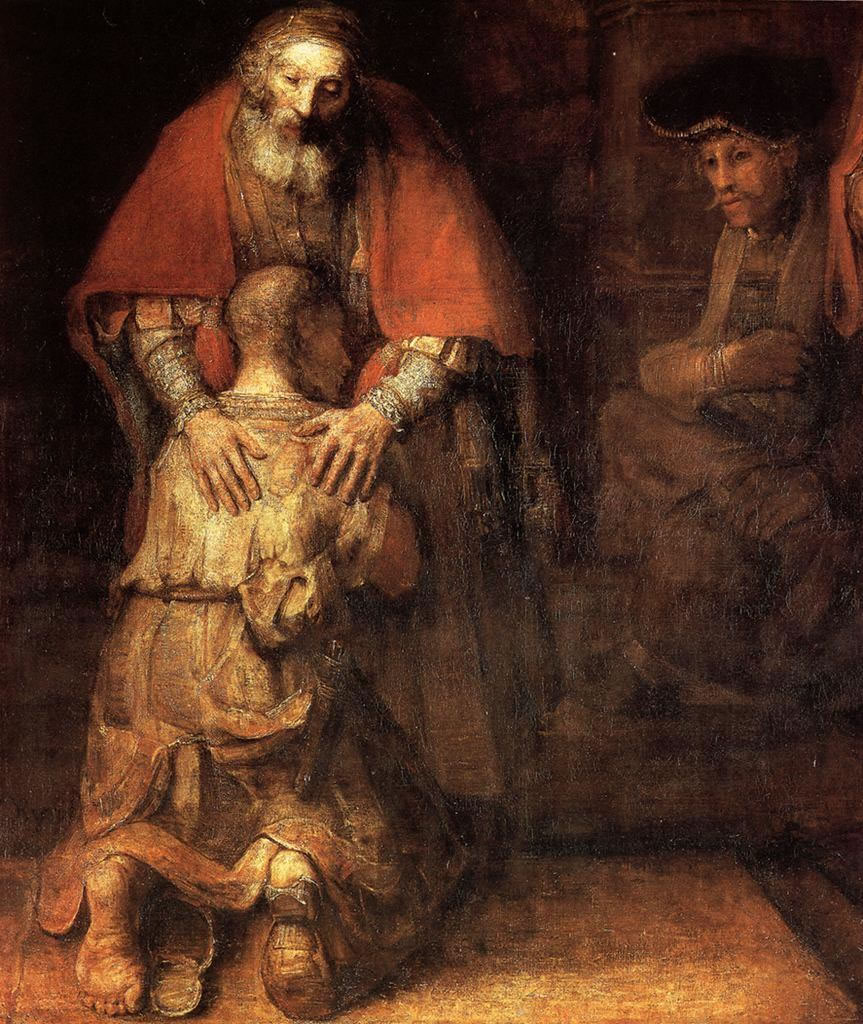
To better integrate my blog with the SJEC Iowa website and Facebook page, I am "crossing over" to Word Press.
You will find all past and new theological opinings at the new blog address, which is http://nealobstat.wordpress.com/
Register there to receive email notifications of new blog posts. Or visit the SJEC Iowa website and link to my blog from there. Or 'Like' SJEC Iowa on Facebook and read my blog there.
I look forward to continuing my conversations with you.
Pax,
Tom Neal
Wednesday, August 17, 2011

Saturday, August 13, 2011
Return. . .
I have not died, or gone into seclusion, or fled Des Moines or the Church! I have just been lost in a sea of learning the last month, blessed be God, though I am now steeling my psyche for return to regular work and kids’ new school year and the general panoply of life’s wondrous daily demands.
So, if this is good news to you, I am glad to say I will write again soon.
If it is bad news, be forewarned!
So, if this is good news to you, I am glad to say I will write again soon.
If it is bad news, be forewarned!
Saturday, July 23, 2011
O Man, Remember Who You Are
Remember?
I thought I would risk boring any readers that might exist out there with an extended reflection on a lecture I offered this week on ‘liturgical anamnesis’, which was itself inspired by the penetrating work of Jerome Hall.
It offered me an astounding variety of insights into the liturgy, memory and such.
I will post it in installments as I write up my lecture notes (which I spoke free form, so I need to write them out, now).
Just Do It
A preface: anamnesis, which means something like “remembrance”, is the Greek word used ((Luke 22:19, 1 Corinthians 11:24-25) to render Jesus’ extraordinary interpolation of the Passover liturgical texts at the Last Supper: “This is my body…this the cup of my blood…do this in remembrance (ἀνάμνησιν) of me.” I say ‘render’ since we assume Jesus’ original words were in Aramaic or Hebrew, and not in Greek.
Exploring the Corners of My Mind
So what is this ‘memory’ all about? I set on an exploration, with Hall as my thinking companion, that was more than a mere Biblical exegesis of a few texts.
Vast amounts of ancient, medieval and modern ink have soaked into paper in service to exploring the question of memory, especially as it relates to growth in the Christian life. This is one of my favorite examples of such scholarship.
Ensouled Brains
Memory, in the human person, is a complex reality that reflects the complexity of our identity as embodied souls. The Christian tradition affirms that cognitive memory, like its sister faculties of intellect and will, is a spiritual (and so non-material) reality that reflects our being made in the divine image.
Setting aside the notoriously thorny problem of defining exactly what memory is, we can say here that cognitive memory is the unifying reservoir of all that we come to know. Memory synthesizes knowledge in a manner that constitutes our more-or-less unified sense of identity - who we are as individual persons. The awareness I have of being an I is rooted in memory's unifying power. Memory, therefore, is the ‘soul’ of personal identity. It is also the soul of our capacity to relate to others as a person, and so to love God, self and neighbor.
One need only think of a victim of Alzheimer to realize how devastating to identity and relationships the loss of memory is.
Narrative Memory
I also argued that the essential structuring form of our memory is ‘the story’ – our memory is essentially organized in narrative form.
We think of who we are within the context of story-sequences that unite disparate facts into a coherent, meaningful narratives that invest those fragmented facts with intelligible meaning. Our essential identity is structured around the many ‘stories’ we have taken in, formed and re-formed; and, if we are more-or-less unified persons, we have a central master-narrative of ‘who we are’ by which we judge all other alternate narratives.
If you think of your self as a ‘center of narrative gravity,’ your existence depends on the persistence of that narrative.
Of Blessed Memory
Blessed John Paul II understood this well, and in his book Memory and Identity, he challenged Europe, as it rushes into an ever-increasingly secularized identity, to return to its authentic and unifying memory which was profoundly shaped by the Judeo-Christian narrative. Both he and Pope Benedict have vigorously argued that the power that secularization is exerting globally is gradually - or not so gradually – erasing the memory of nations and cultures and replacing those memories with a new narrative that is suffused with Capitalist tropes like consumerism, materialism, and the postmodern marketplace ethic that Papa B16 famously identified as the ‘dictatorship of relativism’. {Important to note, though, that Benedict has argued secularism need not be so corrosive.}
So memory as identity must be understood not just on the level of individuals, but also on the level of groups - families, communities, nations.
But, in keeping with my fragmented style of thought, I digress.
Re-minding My Kids
This way of thinking of memory, identity and narrative impacts the way parents think of forming our children's identity.
Among the most powerful influences on children’s identity-construction are the stories we tell them; or the stories we allow to be told to them. Stories are ‘told’ to children in many ways, though the most powerful story-telling is the one they live day to day in our home, our church, our school. This is the ‘lived narrative’ that is life itself. This ever-unfolding, lived story is meant to give credence or give lie to the ‘other’ stories they hear/see in books and movies, songs and video games - stories told at the foot of the bed or the floor beneath the TV.
So many competing narratives filling their memories, seeking to shape their identities, especially those narratives that insert themselves into the imagination – movies, video games, TV shows, and especially music. How carefully we must shepherd them through this maize of narratives and insure that the primary stories we wish to form their identity stand out as the most powerful, most true, most compelling and most frequently featured in their exceptionally impressionable worlds.
Critical Toolbox
In addition, parents must labor hard to insure that children are given the age-appropriate tools to critically negotiate the marketplace of narratives out there. The temptation these days is simply to allow culture more or less unfiltered and unfettered access into our children’s minds, memories, imaginations, leaving a generation of young men and women shaped by fragmented or shattered narratives that give birth to their daughters, moral anxiety and spiritual depression.
But I, wholly fragmented along with my generation, digress still further; though you will see it is related to liturgical anamnesis – that great healer of memory, with the power to restore and reconstitute our memories in the unshakable memory of God and of God’s people.
I thought I would risk boring any readers that might exist out there with an extended reflection on a lecture I offered this week on ‘liturgical anamnesis’, which was itself inspired by the penetrating work of Jerome Hall.
It offered me an astounding variety of insights into the liturgy, memory and such.
I will post it in installments as I write up my lecture notes (which I spoke free form, so I need to write them out, now).
Just Do It
A preface: anamnesis, which means something like “remembrance”, is the Greek word used ((Luke 22:19, 1 Corinthians 11:24-25) to render Jesus’ extraordinary interpolation of the Passover liturgical texts at the Last Supper: “This is my body…this the cup of my blood…do this in remembrance (ἀνάμνησιν) of me.” I say ‘render’ since we assume Jesus’ original words were in Aramaic or Hebrew, and not in Greek.
Exploring the Corners of My Mind
So what is this ‘memory’ all about? I set on an exploration, with Hall as my thinking companion, that was more than a mere Biblical exegesis of a few texts.
Vast amounts of ancient, medieval and modern ink have soaked into paper in service to exploring the question of memory, especially as it relates to growth in the Christian life. This is one of my favorite examples of such scholarship.
Ensouled Brains
Memory, in the human person, is a complex reality that reflects the complexity of our identity as embodied souls. The Christian tradition affirms that cognitive memory, like its sister faculties of intellect and will, is a spiritual (and so non-material) reality that reflects our being made in the divine image.
Setting aside the notoriously thorny problem of defining exactly what memory is, we can say here that cognitive memory is the unifying reservoir of all that we come to know. Memory synthesizes knowledge in a manner that constitutes our more-or-less unified sense of identity - who we are as individual persons. The awareness I have of being an I is rooted in memory's unifying power. Memory, therefore, is the ‘soul’ of personal identity. It is also the soul of our capacity to relate to others as a person, and so to love God, self and neighbor.
One need only think of a victim of Alzheimer to realize how devastating to identity and relationships the loss of memory is.
Narrative Memory
I also argued that the essential structuring form of our memory is ‘the story’ – our memory is essentially organized in narrative form.
We think of who we are within the context of story-sequences that unite disparate facts into a coherent, meaningful narratives that invest those fragmented facts with intelligible meaning. Our essential identity is structured around the many ‘stories’ we have taken in, formed and re-formed; and, if we are more-or-less unified persons, we have a central master-narrative of ‘who we are’ by which we judge all other alternate narratives.
If you think of your self as a ‘center of narrative gravity,’ your existence depends on the persistence of that narrative.
Of Blessed Memory
Blessed John Paul II understood this well, and in his book Memory and Identity, he challenged Europe, as it rushes into an ever-increasingly secularized identity, to return to its authentic and unifying memory which was profoundly shaped by the Judeo-Christian narrative. Both he and Pope Benedict have vigorously argued that the power that secularization is exerting globally is gradually - or not so gradually – erasing the memory of nations and cultures and replacing those memories with a new narrative that is suffused with Capitalist tropes like consumerism, materialism, and the postmodern marketplace ethic that Papa B16 famously identified as the ‘dictatorship of relativism’. {Important to note, though, that Benedict has argued secularism need not be so corrosive.}
So memory as identity must be understood not just on the level of individuals, but also on the level of groups - families, communities, nations.
But, in keeping with my fragmented style of thought, I digress.
Re-minding My Kids
This way of thinking of memory, identity and narrative impacts the way parents think of forming our children's identity.
Among the most powerful influences on children’s identity-construction are the stories we tell them; or the stories we allow to be told to them. Stories are ‘told’ to children in many ways, though the most powerful story-telling is the one they live day to day in our home, our church, our school. This is the ‘lived narrative’ that is life itself. This ever-unfolding, lived story is meant to give credence or give lie to the ‘other’ stories they hear/see in books and movies, songs and video games - stories told at the foot of the bed or the floor beneath the TV.
So many competing narratives filling their memories, seeking to shape their identities, especially those narratives that insert themselves into the imagination – movies, video games, TV shows, and especially music. How carefully we must shepherd them through this maize of narratives and insure that the primary stories we wish to form their identity stand out as the most powerful, most true, most compelling and most frequently featured in their exceptionally impressionable worlds.
Critical Toolbox
In addition, parents must labor hard to insure that children are given the age-appropriate tools to critically negotiate the marketplace of narratives out there. The temptation these days is simply to allow culture more or less unfiltered and unfettered access into our children’s minds, memories, imaginations, leaving a generation of young men and women shaped by fragmented or shattered narratives that give birth to their daughters, moral anxiety and spiritual depression.
But I, wholly fragmented along with my generation, digress still further; though you will see it is related to liturgical anamnesis – that great healer of memory, with the power to restore and reconstitute our memories in the unshakable memory of God and of God’s people.
Sunday, July 17, 2011
Sunday, July 10, 2011
Culture
Gospel
Today's Gospel is all about discerning the quality of culture vis-à-vis receptivity to the word of Christ - whether that refers to the culture of the heart, of a marriage, a family or a nation. Is it hardened? Is it shallow? Is it choked by the tangles of self-consumed prosperity? Or is it well-cultivated?
Cultivated Culture
Jesus praises cultivated soil, and locates the success of his ministry in those souls that had already done the back-breaking work of splitting up hardened clods and readying the soil for his seedy Gospel.
But what kind of cultivated people do indeed respond well to Jesus? Prostitutes. Tax collectors. Lepers. The general lot of 'sinners.'
These are the cultivated ones?
Humus
Clearly the core cultivated quality of character that Jesus seeks is humility, which Aquinas succinctly defined for us: “Humilitas est veritas.” Humility is truth.
Humility is the capacity to see and accept the truth about oneself, others, God. Humility is the capacity, and the desire, to be taught, corrected, called to greatness. Humility is also the capacity to see this truth: the good of God-and-neighbor is inextricably intertwined with my good. Hence, humility can be said also to be the capacity not so much to *think less of myself* as it is to *think of myself less*.
Self-less. Yes.
Think Zacchaeus after the saving seed enters his wee-little humbled heart: "Look, Lord! Here and now I give half of my possessions to the poor, and if I have cheated anybody out of anything, I will pay back four times the amount" (Luke 19:8).
Bettered not embittered
Those who readily responded to Jesus are the ones who have allowed the inevitable blows of life to break up their hardened clods, and who see God not as a pending means of self-promotion but as the mending force of self-less devotion; devotion to the needs of others for the greater glory of that same God.
Religion is not for the betterment of me, but for the betterment of thee by me to the glory of the One in Three.
See?
Today's Gospel is all about discerning the quality of culture vis-à-vis receptivity to the word of Christ - whether that refers to the culture of the heart, of a marriage, a family or a nation. Is it hardened? Is it shallow? Is it choked by the tangles of self-consumed prosperity? Or is it well-cultivated?
Cultivated Culture
Jesus praises cultivated soil, and locates the success of his ministry in those souls that had already done the back-breaking work of splitting up hardened clods and readying the soil for his seedy Gospel.
But what kind of cultivated people do indeed respond well to Jesus? Prostitutes. Tax collectors. Lepers. The general lot of 'sinners.'
These are the cultivated ones?
Humus
Clearly the core cultivated quality of character that Jesus seeks is humility, which Aquinas succinctly defined for us: “Humilitas est veritas.” Humility is truth.
Humility is the capacity to see and accept the truth about oneself, others, God. Humility is the capacity, and the desire, to be taught, corrected, called to greatness. Humility is also the capacity to see this truth: the good of God-and-neighbor is inextricably intertwined with my good. Hence, humility can be said also to be the capacity not so much to *think less of myself* as it is to *think of myself less*.
Self-less. Yes.
Think Zacchaeus after the saving seed enters his wee-little humbled heart: "Look, Lord! Here and now I give half of my possessions to the poor, and if I have cheated anybody out of anything, I will pay back four times the amount" (Luke 19:8).
Bettered not embittered
Those who readily responded to Jesus are the ones who have allowed the inevitable blows of life to break up their hardened clods, and who see God not as a pending means of self-promotion but as the mending force of self-less devotion; devotion to the needs of others for the greater glory of that same God.
Religion is not for the betterment of me, but for the betterment of thee by me to the glory of the One in Three.
See?
Friday, July 8, 2011
Corapi
Perfunctory
It seems that in the Catholic world of news and commentary, everyone has something to say about (Fr) John Corapi; and on a day when the liturgy presents us with a Gospel that speaks of sheep and wolves, it seems an opportune time to share a few thoughts.
Myriad
I have innumerable thoughts about this complicated case which has truly become a macabre spectacle, and I will not repeat much of what has already been said; and said better that I could. But let me share a few of my more pressing ideas.
Truth is true
A most basic point: whatever Corapi said in his ministry that was genuine and true and brought about conversions of mind and heart to a Christ-like way of life is still true and good. An ancient dictum runs like this: "if God can speak through Balaam's ass, he can work through the most hardened sinner."
This is what allows me to sleep at night, and why I chose Balaam's ass as my patron saint. (yes, I believe God raised that dead donkey to glory)
Mercy
As Christians, our engagement with this case must be shaped by a fearsome mercy. Mercy, in Christianity and in Judaism, does not overlook wrongdoing but rather seeks to overcome wrongdoing and lead wrongdoers to repentance, reconciliation and restoration. So, whether in word, deed or prayer, our goal should always be to serve as co-workers with God in healing the damage wrought.
Ego
The Corapi case signals the dangers of mixing grace and America's pathological celebrity culture, or, in the felicitous phrase of Thomas Day, of Ego Renewal in ecclesial leadership. Jesus proffered a stinging critique of this lurking danger to his apostles.
Clearly, there are deep structures of disorder (e.g. narcissism) at work in Corapi that transcend mere moral evaluation, but the wild success of someone like him requires a culture that shares the basic features of that disorder.
As an aside, Corapi claimed a spectacular conversion from a life of drugs, promiscuity, greed and narcissism. How important it is for people of faith to not be naïve. Those who experience radical moral conversions to the faith, and those who wish to enlist their witness for the Church, must be highly aware that who they were before the conversion still abides after and will require a lifetime of graced hard labor, radical honesty and structures of sustained accountability to renovate and recreate them in the image of Christ.
S.O.L.T.
That said, I believe that a great and grave burden of responsibility rests with S.O.L.T. for allowing this to go on for as long as it did. Let me allow one of their own members voice this judgment:
Father Sam Medley, webmaster of the Society of Our Lady of the Holy Trinity, attributed the scandal to a lack of fidelity to the society’s charism. “This whole Corapi conundrum would have never happened if we would have been faithful to our SOLT Charism of ecclesial teams-communion,” he said.
Father Medley added:
“I was asked years ago by my superiors if John Corapi could come and work in the community life of the media apostolate I was running at the time,” Father Medley recounted. “YES, I cried! Please bring him back to community life! Canon law tells us that no one from a community should live outside for an extended period of time. This would have also meant the regulation of his bank account and other violations would have been remedied. Sadly this didn't happen.”
The Cross
Let me close these brief reflections with a turn toward Corapi's signature theme: the cross. He wrote his dissertation on this: The Cross of Christ in the Magisterium of John Paul II
Many have observed that his present actions, and blogged commentaries on those actions, betray the core of his thesis. Of all times in his priestly life, this would have been the most momentous to live this most-radical of all Christian dogmas: that we are redeemed by means of self-denying obedience, suffering and death.
San Juan de la Cruz
I will part with the words of a dear saint companion of mine, St. John of the Cross, and share here three of his ten counsels to members of his discalced religious order. They are illuminating for us all.
To practice the second counsel, which concerns mortification, and profit by it, you should engrave this truth on your heart. And it is that you have not come to the monastery for any other reason than to be worked and tried in virtue; you are like the stone that must be chiseled and fashioned before being set in the building. Thus you should understand that those who are in the monastery are craftsmen placed there by God to mortify you by working and chiseling at you. Some will chisel with words, telling you what you would rather not hear; others by deed, doing against you what you would rather not endure; others by their temperament, being in their person and in their actions a bother and annoyance to you; and others by their thoughts, neither esteeming nor feeling love for you. You ought to suffer these mortifications and annoyances with inner patience, being silent for love of God and understanding that you did not enter the religious life for any other reason than for others to work you in this way, and so you become worthy of heaven. If this was not your reason for entering the religious state, you should not have done so, but should have remained in the world to seek your comfort, honor, reputation, and ease.
The second counsel is wholly necessary for religious so they may fulfill the obligations of their state and find genuine humility, inward quietude, and joy in the Holy Spirit. If you do not practice this, you will know neither how to be a religious nor even why you came to the religious life. Neither will you know how to seek Christ (but only yourself), or find peace of soul, or avoid sinning and often feeling troubled. Trials will never be lacking in religious life, nor does God want them to be. Since he brings souls there to be proved and purified, like gold, with hammer and the fire [Ecclus. 2:5], it is fitting that they encounter trials and temptations from human beings and from devils, and the fire of anguish and affliction. The religious must undergo these trials and should endeavor to bear them patiently and in conformity to God's will, and not so sustain them that instead of being approved by God in this affliction he be reproved for not having wanted to carry the cross of Christ in patience. Since many religious do not understand that they have entered religious life to carry Christ's cross, they do not get along well with others. At the time of reckoning they will find themselves greatly confused and frustrated.
To practice the third counsel, which concerns the practice of virtue, you should be constant in your religious observance and in obedience without any concern for the world, but only for God. In order to achieve this and avoid being deceived, you should never set your eyes on the satisfaction or dissatisfaction of the work at hand as a motive for doing it or failing to do it, but on doing it for God. Thus you must undertake all things, agreeable or disagreeable, for the sole purpose of pleasing God through them.
It seems that in the Catholic world of news and commentary, everyone has something to say about (Fr) John Corapi; and on a day when the liturgy presents us with a Gospel that speaks of sheep and wolves, it seems an opportune time to share a few thoughts.
Myriad
I have innumerable thoughts about this complicated case which has truly become a macabre spectacle, and I will not repeat much of what has already been said; and said better that I could. But let me share a few of my more pressing ideas.
Truth is true
A most basic point: whatever Corapi said in his ministry that was genuine and true and brought about conversions of mind and heart to a Christ-like way of life is still true and good. An ancient dictum runs like this: "if God can speak through Balaam's ass, he can work through the most hardened sinner."
This is what allows me to sleep at night, and why I chose Balaam's ass as my patron saint. (yes, I believe God raised that dead donkey to glory)
Mercy
As Christians, our engagement with this case must be shaped by a fearsome mercy. Mercy, in Christianity and in Judaism, does not overlook wrongdoing but rather seeks to overcome wrongdoing and lead wrongdoers to repentance, reconciliation and restoration. So, whether in word, deed or prayer, our goal should always be to serve as co-workers with God in healing the damage wrought.
Ego
The Corapi case signals the dangers of mixing grace and America's pathological celebrity culture, or, in the felicitous phrase of Thomas Day, of Ego Renewal in ecclesial leadership. Jesus proffered a stinging critique of this lurking danger to his apostles.
Clearly, there are deep structures of disorder (e.g. narcissism) at work in Corapi that transcend mere moral evaluation, but the wild success of someone like him requires a culture that shares the basic features of that disorder.
As an aside, Corapi claimed a spectacular conversion from a life of drugs, promiscuity, greed and narcissism. How important it is for people of faith to not be naïve. Those who experience radical moral conversions to the faith, and those who wish to enlist their witness for the Church, must be highly aware that who they were before the conversion still abides after and will require a lifetime of graced hard labor, radical honesty and structures of sustained accountability to renovate and recreate them in the image of Christ.
S.O.L.T.
That said, I believe that a great and grave burden of responsibility rests with S.O.L.T. for allowing this to go on for as long as it did. Let me allow one of their own members voice this judgment:
Father Sam Medley, webmaster of the Society of Our Lady of the Holy Trinity, attributed the scandal to a lack of fidelity to the society’s charism. “This whole Corapi conundrum would have never happened if we would have been faithful to our SOLT Charism of ecclesial teams-communion,” he said.
Father Medley added:
“I was asked years ago by my superiors if John Corapi could come and work in the community life of the media apostolate I was running at the time,” Father Medley recounted. “YES, I cried! Please bring him back to community life! Canon law tells us that no one from a community should live outside for an extended period of time. This would have also meant the regulation of his bank account and other violations would have been remedied. Sadly this didn't happen.”
The Cross
Let me close these brief reflections with a turn toward Corapi's signature theme: the cross. He wrote his dissertation on this: The Cross of Christ in the Magisterium of John Paul II
Many have observed that his present actions, and blogged commentaries on those actions, betray the core of his thesis. Of all times in his priestly life, this would have been the most momentous to live this most-radical of all Christian dogmas: that we are redeemed by means of self-denying obedience, suffering and death.
San Juan de la Cruz
I will part with the words of a dear saint companion of mine, St. John of the Cross, and share here three of his ten counsels to members of his discalced religious order. They are illuminating for us all.
To practice the second counsel, which concerns mortification, and profit by it, you should engrave this truth on your heart. And it is that you have not come to the monastery for any other reason than to be worked and tried in virtue; you are like the stone that must be chiseled and fashioned before being set in the building. Thus you should understand that those who are in the monastery are craftsmen placed there by God to mortify you by working and chiseling at you. Some will chisel with words, telling you what you would rather not hear; others by deed, doing against you what you would rather not endure; others by their temperament, being in their person and in their actions a bother and annoyance to you; and others by their thoughts, neither esteeming nor feeling love for you. You ought to suffer these mortifications and annoyances with inner patience, being silent for love of God and understanding that you did not enter the religious life for any other reason than for others to work you in this way, and so you become worthy of heaven. If this was not your reason for entering the religious state, you should not have done so, but should have remained in the world to seek your comfort, honor, reputation, and ease.
The second counsel is wholly necessary for religious so they may fulfill the obligations of their state and find genuine humility, inward quietude, and joy in the Holy Spirit. If you do not practice this, you will know neither how to be a religious nor even why you came to the religious life. Neither will you know how to seek Christ (but only yourself), or find peace of soul, or avoid sinning and often feeling troubled. Trials will never be lacking in religious life, nor does God want them to be. Since he brings souls there to be proved and purified, like gold, with hammer and the fire [Ecclus. 2:5], it is fitting that they encounter trials and temptations from human beings and from devils, and the fire of anguish and affliction. The religious must undergo these trials and should endeavor to bear them patiently and in conformity to God's will, and not so sustain them that instead of being approved by God in this affliction he be reproved for not having wanted to carry the cross of Christ in patience. Since many religious do not understand that they have entered religious life to carry Christ's cross, they do not get along well with others. At the time of reckoning they will find themselves greatly confused and frustrated.
To practice the third counsel, which concerns the practice of virtue, you should be constant in your religious observance and in obedience without any concern for the world, but only for God. In order to achieve this and avoid being deceived, you should never set your eyes on the satisfaction or dissatisfaction of the work at hand as a motive for doing it or failing to do it, but on doing it for God. Thus you must undertake all things, agreeable or disagreeable, for the sole purpose of pleasing God through them.
Wednesday, July 6, 2011
Menagerie of musings
Summer
I love summer. It's a time for vacations. And if you ever wondered where vacations came from, read about it! We can thank the Methodists and physicians in particular for its U.S. form, but we have the Greeks and the Jews to thank in particular for the consecration of leisure as essential to being human.
Interlude
Seemingly unrelated to theology is my recent obsession with the Iowa-esque dance-song, Interlude, by Attack Attack.
I love dance, though I am, as my kids would say, a "Fail" when it comes to artful dancing. So, imagine when I crank this song early in the a.m. at home and start at it, my feet thundering on the floor in graceless thuds.
Good aerobics, good cardio-vascular, good Mass preparation.
One of the reasons I love dance is for its sheer uselessness. Oh, I realize that it has psycho-somatic benefits. But, just like liturgy, it courts the spontaneity and wonder of unproductive 'play'. Play: a sheer joy and celebration of existence, where freedom can lead imagination and thought unfettered into a choreographed creativity and exploration within the vast expanses of the true and the good and the beautiful. In play the dramatic nature of existence - with its joy and sorrow, laughter and lament, violence and gentleness, labor and rest, virtue and vice - is rehearsed and performed in playful abandon.
Play is re-creation, as it participates in the sheer just-because act of God who created the cosmos ex nihilo out of the unfettered freedom of sheer joy and love; and re-deemed that same cosmos out of that same sheer-motive.
David totally got this liturgical aspect of dance, to Michal's chagrin. The Son of David, who stripped himself of glory when he entered the Ark of the Covenant, was greeted by the dance of the Baptist in his mother's womb.
But at Mass we need not stick dance moves into the ritual - the ritual is already highly stylized and crafted as a choreographed dance.
The Eritreans really understand this - they have grace-full rubrics that make clerics poetry-in-motion. Same with the Orthodox Dance of Isaiah, done at weddings and baptisms.
And we Latin Rite Catholics can dance our rubrics and rituals well if we know how to play before the Lord. As an AME pastor said to me once after he attended the Easter Vigil: "You Catholics got all the moves, you just gotta loosen up!"
Whew
All that from Interlude.
Dance!
I love summer. It's a time for vacations. And if you ever wondered where vacations came from, read about it! We can thank the Methodists and physicians in particular for its U.S. form, but we have the Greeks and the Jews to thank in particular for the consecration of leisure as essential to being human.
Interlude
Seemingly unrelated to theology is my recent obsession with the Iowa-esque dance-song, Interlude, by Attack Attack.
I love dance, though I am, as my kids would say, a "Fail" when it comes to artful dancing. So, imagine when I crank this song early in the a.m. at home and start at it, my feet thundering on the floor in graceless thuds.
Good aerobics, good cardio-vascular, good Mass preparation.
One of the reasons I love dance is for its sheer uselessness. Oh, I realize that it has psycho-somatic benefits. But, just like liturgy, it courts the spontaneity and wonder of unproductive 'play'. Play: a sheer joy and celebration of existence, where freedom can lead imagination and thought unfettered into a choreographed creativity and exploration within the vast expanses of the true and the good and the beautiful. In play the dramatic nature of existence - with its joy and sorrow, laughter and lament, violence and gentleness, labor and rest, virtue and vice - is rehearsed and performed in playful abandon.
Play is re-creation, as it participates in the sheer just-because act of God who created the cosmos ex nihilo out of the unfettered freedom of sheer joy and love; and re-deemed that same cosmos out of that same sheer-motive.
David totally got this liturgical aspect of dance, to Michal's chagrin. The Son of David, who stripped himself of glory when he entered the Ark of the Covenant, was greeted by the dance of the Baptist in his mother's womb.
But at Mass we need not stick dance moves into the ritual - the ritual is already highly stylized and crafted as a choreographed dance.
The Eritreans really understand this - they have grace-full rubrics that make clerics poetry-in-motion. Same with the Orthodox Dance of Isaiah, done at weddings and baptisms.
And we Latin Rite Catholics can dance our rubrics and rituals well if we know how to play before the Lord. As an AME pastor said to me once after he attended the Easter Vigil: "You Catholics got all the moves, you just gotta loosen up!"
Whew
All that from Interlude.
Dance!
Friday, July 1, 2011
A great Solemnity
I love this last of the post-Easter feasts that is, to me, a final meditation on the twin-dogmatic feasts (Trinity/Corpus Christi). Those dogmatic feasts proclaim that the Paschal Mystery, at heart, offers to us the mind-blowing revelation of God-as-Three, and the sacramental gift of radically real (con-substantial) participation in the life of the Three-in-One.
Today's feast says that the revelation and the gift both have their epicenter in the divine-human Heart of Jesus Christ - they are the supreme and final gift of God's love that revealed its depths at the very moment humanity was given chance to vent its full fury against God.
Let us rejoice in this day!
A poem in His honor:
O Heart All-Burning!
Deep well, water's source-less store;
soaring vastness, dark Mountain,
piercing heights, infinite Roar:
Gideon, lap up this mystic Fountain!
Searing furnace, un-consuming Flame
devouring all my tinder, harvest-weeds;
your kindling wood within, Rood-named
scatters Thy Passion's bloodied seeds:
O Fertile Flame, set ablaze love untamed.
Amen.
Today's feast says that the revelation and the gift both have their epicenter in the divine-human Heart of Jesus Christ - they are the supreme and final gift of God's love that revealed its depths at the very moment humanity was given chance to vent its full fury against God.
Let us rejoice in this day!
A poem in His honor:
O Heart All-Burning!
Deep well, water's source-less store;
soaring vastness, dark Mountain,
piercing heights, infinite Roar:
Gideon, lap up this mystic Fountain!
Searing furnace, un-consuming Flame
devouring all my tinder, harvest-weeds;
your kindling wood within, Rood-named
scatters Thy Passion's bloodied seeds:
O Fertile Flame, set ablaze love untamed.
Amen.
Wednesday, June 29, 2011
Anyway
I just had to re-post this fabulous song.
It's a remake of Mother Teresa's poetic meditation
on St Ignatius's principle of 'holy indifference'.
Also, I edited my Tree of Life post - I have been rushed
writing of late and make lots of sloppy mistakes. Ugh.
A blessed Feast! Pray for Catholic-Orthodox unity as
Orthodox reps are in Rome to honor the Petrine blood
that consecrated the papacy so long ago.
It's a remake of Mother Teresa's poetic meditation
on St Ignatius's principle of 'holy indifference'.
Also, I edited my Tree of Life post - I have been rushed
writing of late and make lots of sloppy mistakes. Ugh.
A blessed Feast! Pray for Catholic-Orthodox unity as
Orthodox reps are in Rome to honor the Petrine blood
that consecrated the papacy so long ago.
Tuesday, June 28, 2011
Tree of Life
My wife and I went to see Tree of Life last night. Sean Penn, Brad Pitt, Jessica Chastain, et alia did a bang up job.
Let me tell you, it was quite an experience!
I don't want to go on too long about what I saw its meaning to be, or try to summarize the narrative. I will share a few thoughts that have not yet been touched by the no-doubt myriad commentaries already littering the Net.
Graceful Theology
It was thoroughly imbued with theological meaning. The opening quote from Job 38:4,7 framed the whole movie as a struggle with the problem of good and evil, of meaning and purpose, against the backdrop of God's providential care of all life. God created the terrifyingly vast universe, and is to be perceived in the beautiful, the tragic and the seemingly meaningless events of life.
One gets a sense that the film is an extended meditation on the tensions inherent in monotheism, that allows the main characters to wrestle with this God who presides over a universe with inscrutable wisdom.
Will and Grace
It was also a story about the dialectical tensions of 'nature and grace.'
There was a remarkable quote whispered by the wife/mother (Mrs. O'Brien) at the beginning of the movie:
The nuns taught us there were two ways through life - the way of nature and the way of grace. You have to choose which one you'll follow. Grace doesn't try to please itself. Accepts being slighted, forgotten, disliked. Accepts insults and injuries. Nature only wants to please itself. Get others to please it too. Likes to lord it over them. To have its own way. It finds reasons to be unhappy when all the world is shining around it...The nuns taught us that no one who loves the way of grace ever comes to a bad end.
She closes this ponderous discourse, evidently addressing 'grace', I will be true to you. Whatever comes.
An almost Marian phrase.
Harmony
The movie unfolds as a narrative of grace and nature struggling mightily to harmonize, to find their balance and symmetry. Ultimately it is a story of grace's unlikely, tragic triumph.
This tumultuous struggle was shown in the violent and strangely beautiful beginnings of creation, at the inception and evolution of life on earth, and above all in a marriage/family that stood at the epicenter of the film's nature-grace drama.
Disorienting
The sense of time in the movie was definitely non-linear, with past, present and future constantly interchanging. While this often made the storyline difficult to follow, it gave the movie a liturgical character where past, present and future intermingle, where time and eternity intersect. And as with salvation history, the apparent randomness of the ordering of events traced out a single story of great and rich depth.
The sense of space also followed time's disruptions, as the camera's eye traversed oceans and deserts, cities and galaxies, microbes and dinosaurs, trees and dining rooms, while always rhythmically returning to a fiery point of 'living light' that was (presumably) God. All of these spacial treks were ambled in erratic sequences. Here I found powerfully evoked the liturgy's power - via art, architecture, sacramentalized matter - to transform space and call into unity the whole cosmos at-once into a material symphony of God's creative-redemptive providence.
Near the end of the movie, at a key moment of 'redemption' for the main character, the chanting of the Agnus Dei, followed by a litanic Amen sealed that liturgic sense for me.
The movie felt more like a work of iconography. It was disorienting, but, for me, in a strangely prayerful way it opened my imagination to something new and transcendent. In fact, today as I was reading a text on liturgical theology, I found myself flooded with insights that linked the movie to the text.
Ite, Missa est
I highly recommend seeing it. It's the kind of movie that continues to yield new insights after you have seen it. At least for people with overly active theological imaginations like myself.
Not all will agree, but...
With so much kitsch smeared on the screens of movie theaters these days, it's nice to know that those same screens can still bear the weight and beauty of masterful art.
Let me tell you, it was quite an experience!
I don't want to go on too long about what I saw its meaning to be, or try to summarize the narrative. I will share a few thoughts that have not yet been touched by the no-doubt myriad commentaries already littering the Net.
Graceful Theology
It was thoroughly imbued with theological meaning. The opening quote from Job 38:4,7 framed the whole movie as a struggle with the problem of good and evil, of meaning and purpose, against the backdrop of God's providential care of all life. God created the terrifyingly vast universe, and is to be perceived in the beautiful, the tragic and the seemingly meaningless events of life.
One gets a sense that the film is an extended meditation on the tensions inherent in monotheism, that allows the main characters to wrestle with this God who presides over a universe with inscrutable wisdom.
Will and Grace
It was also a story about the dialectical tensions of 'nature and grace.'
There was a remarkable quote whispered by the wife/mother (Mrs. O'Brien) at the beginning of the movie:
The nuns taught us there were two ways through life - the way of nature and the way of grace. You have to choose which one you'll follow. Grace doesn't try to please itself. Accepts being slighted, forgotten, disliked. Accepts insults and injuries. Nature only wants to please itself. Get others to please it too. Likes to lord it over them. To have its own way. It finds reasons to be unhappy when all the world is shining around it...The nuns taught us that no one who loves the way of grace ever comes to a bad end.
She closes this ponderous discourse, evidently addressing 'grace', I will be true to you. Whatever comes.
An almost Marian phrase.
Harmony
The movie unfolds as a narrative of grace and nature struggling mightily to harmonize, to find their balance and symmetry. Ultimately it is a story of grace's unlikely, tragic triumph.
This tumultuous struggle was shown in the violent and strangely beautiful beginnings of creation, at the inception and evolution of life on earth, and above all in a marriage/family that stood at the epicenter of the film's nature-grace drama.
Disorienting
The sense of time in the movie was definitely non-linear, with past, present and future constantly interchanging. While this often made the storyline difficult to follow, it gave the movie a liturgical character where past, present and future intermingle, where time and eternity intersect. And as with salvation history, the apparent randomness of the ordering of events traced out a single story of great and rich depth.
The sense of space also followed time's disruptions, as the camera's eye traversed oceans and deserts, cities and galaxies, microbes and dinosaurs, trees and dining rooms, while always rhythmically returning to a fiery point of 'living light' that was (presumably) God. All of these spacial treks were ambled in erratic sequences. Here I found powerfully evoked the liturgy's power - via art, architecture, sacramentalized matter - to transform space and call into unity the whole cosmos at-once into a material symphony of God's creative-redemptive providence.
Near the end of the movie, at a key moment of 'redemption' for the main character, the chanting of the Agnus Dei, followed by a litanic Amen sealed that liturgic sense for me.
The movie felt more like a work of iconography. It was disorienting, but, for me, in a strangely prayerful way it opened my imagination to something new and transcendent. In fact, today as I was reading a text on liturgical theology, I found myself flooded with insights that linked the movie to the text.
Ite, Missa est
I highly recommend seeing it. It's the kind of movie that continues to yield new insights after you have seen it. At least for people with overly active theological imaginations like myself.
Not all will agree, but...
With so much kitsch smeared on the screens of movie theaters these days, it's nice to know that those same screens can still bear the weight and beauty of masterful art.
Friday, June 24, 2011
Public Worship
My quest for creative examples of how Catholics work to invade the public square with 'the holy' stumbled on this flash mob moment.
Such a perfect preface to Corpus Christi.
Franciscans rock.
Such a perfect preface to Corpus Christi.
Franciscans rock.
Re-vised post
I had to edit this after re-reading it and seeing how awfully messy it was! My obsessive tendencies show. Don't feel obliged to read again.
Gospel Truth
I was struck by today's Gospel regarding authority. What set Jesus apart?
To Sir
I watched the movie, To Sir, With Love with my children the other day. I hadn't seen it in years, and found it just as inspiring as when I first saw it. Actually, I found it more inspiring as I have lived 30 more years of life that allow me see its truth in a fresh way.
I found To Sir to be a striking example of the virtuous man's capacity to influence others simply by virtue of his virtue. Mark Thackeray is hired as a teacher in the slums of London's east end at a school for 'misfits', where there is little discipline among teachers and students. Largely by the force of his stolid and stoic character - itself forged by hardship in his own life - Thackeray draws out of these young men and women their own natural desire for greatness.
Character makes an impression
The authoritative character of Christian witness lies not primarily in word or argument, but in the quality, depth, and solidity of one's character. One who has internalized the word of God becomes a living force of change just by virtue of who s/he is.
Suffering
I also reflected on the role that suffering plays in forging character, and how the praise of suffering as character-building fills the New Testament.
That reflection brought to mind an elderly Russian woman I knew in Rhode Island who once said of a young and energetic Orthodox priest that had just 'wowed' a congregation with his eloquence: "It was nice, but he does not know of what he speaks; he has not suffered enough."
Authority capable of transforming others must be forged in the fire of suffering, molded by the force of long and hard labors, and carved by the chisel of pain - though for a Christian this only succeeds if we are vivified by faith, hope and love.
Jesus' character
Jesus spoke with authority - his character was deep, teeming with virtues, solid and unmovable as a rock. But his power was only 'made perfect' in the crucible of his Passion. Such a stunning thought.
Chisel me, O Lord
Strive to become in yourself that unshakable rock that has power to give harbor to those buffeted by life's storms.
Gospel Truth
I was struck by today's Gospel regarding authority. What set Jesus apart?
To Sir
I watched the movie, To Sir, With Love with my children the other day. I hadn't seen it in years, and found it just as inspiring as when I first saw it. Actually, I found it more inspiring as I have lived 30 more years of life that allow me see its truth in a fresh way.
I found To Sir to be a striking example of the virtuous man's capacity to influence others simply by virtue of his virtue. Mark Thackeray is hired as a teacher in the slums of London's east end at a school for 'misfits', where there is little discipline among teachers and students. Largely by the force of his stolid and stoic character - itself forged by hardship in his own life - Thackeray draws out of these young men and women their own natural desire for greatness.
Character makes an impression
The authoritative character of Christian witness lies not primarily in word or argument, but in the quality, depth, and solidity of one's character. One who has internalized the word of God becomes a living force of change just by virtue of who s/he is.
Suffering
I also reflected on the role that suffering plays in forging character, and how the praise of suffering as character-building fills the New Testament.
That reflection brought to mind an elderly Russian woman I knew in Rhode Island who once said of a young and energetic Orthodox priest that had just 'wowed' a congregation with his eloquence: "It was nice, but he does not know of what he speaks; he has not suffered enough."
Authority capable of transforming others must be forged in the fire of suffering, molded by the force of long and hard labors, and carved by the chisel of pain - though for a Christian this only succeeds if we are vivified by faith, hope and love.
Jesus' character
Jesus spoke with authority - his character was deep, teeming with virtues, solid and unmovable as a rock. But his power was only 'made perfect' in the crucible of his Passion. Such a stunning thought.
Chisel me, O Lord
Strive to become in yourself that unshakable rock that has power to give harbor to those buffeted by life's storms.
Thursday, June 23, 2011
Secular Relics?
One could argue from this that the cult of relics is built into the spiritual DNA of humanity.
Or not.
Or not.
Sunday, June 19, 2011
A spontaneous laud to the thrice holy God. . .
O mes Trois
Three are gathered
In your Name, O God;
Thrice holy, majestic
Substantially the same;
Of one essence, undivided
Threefold Flame, raging
Enkindling, consuming
Sin’s isolating shame;
Incarnate, One of Three
Drank dregs of our blame
On a Tree, fallen-risen,
Regathered the Free by
Untamed Love, breathed;
Thou, O Most High Beauty,
Thou alone I long to see
Unbegotten, Life-Begetting
Magnificently wondrous
and ineffably dancing
life-creating Trinity.
Three are gathered
In your Name, O God;
Thrice holy, majestic
Substantially the same;
Of one essence, undivided
Threefold Flame, raging
Enkindling, consuming
Sin’s isolating shame;
Incarnate, One of Three
Drank dregs of our blame
On a Tree, fallen-risen,
Regathered the Free by
Untamed Love, breathed;
Thou, O Most High Beauty,
Thou alone I long to see
Unbegotten, Life-Begetting
Magnificently wondrous
and ineffably dancing
life-creating Trinity.
Thursday, June 16, 2011
Distracted into Silence
I have blanked out for a while here as a blogger, largely because my work load has been so demanding. Because I need a certain amount of ‘space’ to think prayerfully before I blog, when I am frenetic in my work and home commitments that space shrinks.
Not that this is of interest, but there it is.
Over the Top
We have left the paschal season of Eastertide. This year I experienced its excessive character more than usual. Excessive in its call to bask in glory, to rejoice in the resurrection and to recall the white hot fire that burned in the first hours, days and years of the Church’s existence.
A Study in Contrast
It’s really an interesting tension that fills one who wishes to live from within the unique grace of liturgical time. On one hand, the liturgy cultivates its own attitudes toward life – Lenten penance or Easter glory; Advent longing or Christmas joy. On the other hand, one’s life in the world cultivates its own attitudes toward life – work and family; life’s seasons and stresses. They often do not find between them facile reconciliation.
What to do?
Let me venture a few gestures toward an answer.
Are we there yet?
First, as liturgy is truly the intersection between time and eternity, between the ‘already’ and ‘not yet,’ it is inherently tense, restless, conflicted. Pilgrims on a journey always wrestle with the fact that they are ‘not yet’ where they wish to be, and have to constantly read their present pilgrim plight through the lens of the goal that awaits them. They are buoyed by desire and hope, knowing that the goal of their pilgrimage surely awaits them.
Erosion, Eruption
Second, I find that the graces and attitudes proper to every liturgical season are often only experienced in the midst of the actual liturgical celebrations of that season. In the Mass, in praying the breviary, in my lectio time with the Mass readings I find a time and place where I can allow the joy or sorrow, the desire or praise to take hold of me. While I will not be consciously attentive throughout the day to the unique liturgical grace, it has left its mark on me and has shaped me. While this grace sometimes surprisingly intrudes into the earthen clay of my day with existential verve, mostly I see it only in retrospect. I am being changed, mostly at imperceptible rates, in ways that in retrospect amaze me. I am being broken down – metabolized – by the Spirit who inhabits the liturgy in a most remarkable and unremarkable way. Broken, only to be refashioned. Knit afresh in the womb of the liturgy.
Here it is who I am becoming that allows the liturgical celebrations' grace to overflow into the discontinuities of my life in the world.
As a mentor of mine once said of himself, after 46 years of being the priestly celebrant of the liturgy, "Joy fills everything now, even sorrow and pain."
He was a metabolized man, who now, having died several years ago, no doubt smiles knowingly as he gazes on the Cause of that joy.
Hollow Be Thy Name
Third, there is a certain disconnect between liturgy and life which is the unfortunate consequence of living in a de-sacralized, secularized world – a world that ever-more thoroughly evacuates the sacred from culture, and so makes any attempt to discover a harmony between life and liturgy, grace and nature, ever-more difficult. It creates not a tension but a disconnect. The chasm between a God-less world and a God-drenched liturgy is not one that is natural to Christian life in the world. Overcoming this chasm, and reversing the relentless process of sanitizing the divine from the cosmos is an imperative built into those final words of the Mass: Ite, Missa est. Go, be sent.
Three’s a crowd already, so I will stop here at point three. But how apropos to our impending Feast!
Wow, Wow, Wow
I hope your celebration of the dogmatic feast this Sunday – Trinity Sunday – gives you ‘space’ to gaze on, reflect on, and step into the most astounding truth that a human mind can seize upon: that dizzying, astounding mystery of God’s own supreme secret about Himself. A secret into which we dare to peer.
I dare you.
Let us worship.
I have blanked out for a while here as a blogger, largely because my work load has been so demanding. Because I need a certain amount of ‘space’ to think prayerfully before I blog, when I am frenetic in my work and home commitments that space shrinks.
Not that this is of interest, but there it is.
Over the Top
We have left the paschal season of Eastertide. This year I experienced its excessive character more than usual. Excessive in its call to bask in glory, to rejoice in the resurrection and to recall the white hot fire that burned in the first hours, days and years of the Church’s existence.
A Study in Contrast
It’s really an interesting tension that fills one who wishes to live from within the unique grace of liturgical time. On one hand, the liturgy cultivates its own attitudes toward life – Lenten penance or Easter glory; Advent longing or Christmas joy. On the other hand, one’s life in the world cultivates its own attitudes toward life – work and family; life’s seasons and stresses. They often do not find between them facile reconciliation.
What to do?
Let me venture a few gestures toward an answer.
Are we there yet?
First, as liturgy is truly the intersection between time and eternity, between the ‘already’ and ‘not yet,’ it is inherently tense, restless, conflicted. Pilgrims on a journey always wrestle with the fact that they are ‘not yet’ where they wish to be, and have to constantly read their present pilgrim plight through the lens of the goal that awaits them. They are buoyed by desire and hope, knowing that the goal of their pilgrimage surely awaits them.
Erosion, Eruption
Second, I find that the graces and attitudes proper to every liturgical season are often only experienced in the midst of the actual liturgical celebrations of that season. In the Mass, in praying the breviary, in my lectio time with the Mass readings I find a time and place where I can allow the joy or sorrow, the desire or praise to take hold of me. While I will not be consciously attentive throughout the day to the unique liturgical grace, it has left its mark on me and has shaped me. While this grace sometimes surprisingly intrudes into the earthen clay of my day with existential verve, mostly I see it only in retrospect. I am being changed, mostly at imperceptible rates, in ways that in retrospect amaze me. I am being broken down – metabolized – by the Spirit who inhabits the liturgy in a most remarkable and unremarkable way. Broken, only to be refashioned. Knit afresh in the womb of the liturgy.
Here it is who I am becoming that allows the liturgical celebrations' grace to overflow into the discontinuities of my life in the world.
As a mentor of mine once said of himself, after 46 years of being the priestly celebrant of the liturgy, "Joy fills everything now, even sorrow and pain."
He was a metabolized man, who now, having died several years ago, no doubt smiles knowingly as he gazes on the Cause of that joy.
Hollow Be Thy Name
Third, there is a certain disconnect between liturgy and life which is the unfortunate consequence of living in a de-sacralized, secularized world – a world that ever-more thoroughly evacuates the sacred from culture, and so makes any attempt to discover a harmony between life and liturgy, grace and nature, ever-more difficult. It creates not a tension but a disconnect. The chasm between a God-less world and a God-drenched liturgy is not one that is natural to Christian life in the world. Overcoming this chasm, and reversing the relentless process of sanitizing the divine from the cosmos is an imperative built into those final words of the Mass: Ite, Missa est. Go, be sent.
Three’s a crowd already, so I will stop here at point three. But how apropos to our impending Feast!
Wow, Wow, Wow
I hope your celebration of the dogmatic feast this Sunday – Trinity Sunday – gives you ‘space’ to gaze on, reflect on, and step into the most astounding truth that a human mind can seize upon: that dizzying, astounding mystery of God’s own supreme secret about Himself. A secret into which we dare to peer.
I dare you.
Let us worship.
Saturday, May 28, 2011
‘Love one another’
Today’s Gospel text in the Mass offers a remarkable insight into the vision of Jesus for the ‘new Israel’ he is establishing around himself at the Last Supper. As Israel was first constituted God’s people at Mount Sinai by an extraordinary encounter with the living God, so now the new Israel enters into a final covenant encounter with Israel’s God-made-flesh on Mount Zion.
A new commandment, a new covenant meal, a new leadership, a new theophany, a new exodus narrative, a new mountain, a new friendship with God.
Just as Moses had encountered God as “I AM” at Mount Sinai before the exodus, only to return to Sinai after the exodus to receive the commandments from God; so the disciples, who have heard Jesus name himself “I AM” during his public ministry, now receive his commandment to love God and one another.
Hallmark
We as Church are the new Israel, marked in our deepest core by this primal commandment. We are meant to represent ‘all things new,’ inasmuch as God in Jesus has chosen us to bear his new creation: humanity reconciled, icon of God’s original intention for humanity to be a community of love.
‘One another.’
Authenticity, which is nothing other than conformity with the author’s original intention, must be the soul of our identity and the foundation of our power to attract the rest of humanity to God’s new Israel. Jesus, in the Gospel texts this week, has made it clear that the way we love one another within the Church is the first and founding witness we can offer a world which Jesus notes is marked in its deepest core by the mark of Cain: hate.
How are we doing in our Church? Can the ‘world’ peer in to our ecclesial staffs and committees, associations and ministries, clerical and lay communities and say: “so that’s how it’s supposed to look!” I always say that if we lived our faith authentically, one who looks in the dictionary to define “love” should see in place of the first definition, “See Church;” and when they flip to the word Church, they would find, “see Christ.”
Hard as nails
This love is hard, excruciating, and admits of no rest from the struggle. My trek to monthly sacramental confession is my return to the Christ of the Upper Room, facing him as he issues that command afresh to me: love one another. And I feebly echo his command with the cry, Kyrie eleison.
But I leave that sacramental encounter with Christ re-invested with the power of his commandment which, as at the moment of creation, has the power to re-create me as an icon of his love: Fiat lux!
Let me be light, O Lord. Amen.
Today’s Gospel text in the Mass offers a remarkable insight into the vision of Jesus for the ‘new Israel’ he is establishing around himself at the Last Supper. As Israel was first constituted God’s people at Mount Sinai by an extraordinary encounter with the living God, so now the new Israel enters into a final covenant encounter with Israel’s God-made-flesh on Mount Zion.
A new commandment, a new covenant meal, a new leadership, a new theophany, a new exodus narrative, a new mountain, a new friendship with God.
Just as Moses had encountered God as “I AM” at Mount Sinai before the exodus, only to return to Sinai after the exodus to receive the commandments from God; so the disciples, who have heard Jesus name himself “I AM” during his public ministry, now receive his commandment to love God and one another.
Hallmark
We as Church are the new Israel, marked in our deepest core by this primal commandment. We are meant to represent ‘all things new,’ inasmuch as God in Jesus has chosen us to bear his new creation: humanity reconciled, icon of God’s original intention for humanity to be a community of love.
‘One another.’
Authenticity, which is nothing other than conformity with the author’s original intention, must be the soul of our identity and the foundation of our power to attract the rest of humanity to God’s new Israel. Jesus, in the Gospel texts this week, has made it clear that the way we love one another within the Church is the first and founding witness we can offer a world which Jesus notes is marked in its deepest core by the mark of Cain: hate.
How are we doing in our Church? Can the ‘world’ peer in to our ecclesial staffs and committees, associations and ministries, clerical and lay communities and say: “so that’s how it’s supposed to look!” I always say that if we lived our faith authentically, one who looks in the dictionary to define “love” should see in place of the first definition, “See Church;” and when they flip to the word Church, they would find, “see Christ.”
Hard as nails
This love is hard, excruciating, and admits of no rest from the struggle. My trek to monthly sacramental confession is my return to the Christ of the Upper Room, facing him as he issues that command afresh to me: love one another. And I feebly echo his command with the cry, Kyrie eleison.
But I leave that sacramental encounter with Christ re-invested with the power of his commandment which, as at the moment of creation, has the power to re-create me as an icon of his love: Fiat lux!
Let me be light, O Lord. Amen.
Wednesday, May 11, 2011
These Forty Days
Some scattered reflections from a scattered mind.
The Glory of these Forty Days
Easter season rolls along, even as nature today provides us with melodious thunder and gentle rains. This portion of the paschal season, which permits a unique sacramental and liturgical encounter with the risen-but-not-ascended Christ of the Forty Days, is such an extraordinary time of grace.
Because these Forty days are so transparent and dangerously thin to God-with-us, the Church feels bold enough to introduce the texts of St. John's Gospel into the Mass. That Gospel, which reveals so clearly in exquisite poetic rhythm the heart of the Word-made-flesh, is as close as the paper and ink of the Scriptures come to being transubstantiated by the inspiring Spirit. If it is true that in Paradise the Scriptures will pass away before the vision of God, I might venture to say the Gospel of John will still remain…
Missal Mania and Theo-speak
I have been thinking lots about the New Roman Missal of late, especially after the diocesan Missal Mania two weeks ago.
The new translation of the Mass will offer us a more augmented lexicon of faith. More theologically dense words that will give a sense of 'otherness' from our day-to-day idiom. Liturgy is meant to disrupt our 'normal' experience of life and break open in us again and again fresh wonder over God's wonderful works. Liturgy, which is meant to orient our whole life toward God, should be disorienting for those whose lives have wandered from faith's pilgrimage toward Christ rising in the East.
Con-what?
Let's take the example of the newly translated Creed. Interpreting it presents a challenge!
Consubstantial with the Father. What? Exactly. What.
A word that does not enter our day to day conversations. But we know 'substantial' in colloquial speech – it usually means something that possesses depth of meaning, enduring significance, and is satisfying. Now, that's not what the word means in a theological context, but the reference to our common use is useful and important. It is indeed a word that bears within it great depth of meaning, enduring significance, and is satisfying for a faith in quest of deeper understanding.
So, simply said – what does consubstantial mean? While trying not to get too detailed, in Greek philosophy the word substance generally was used to define the essential and unchanging "what-is-it" of particular real objects in human experience. (Real – as opposed to imaginary or potential – but not actual reality.) The inverse of substance is 'accident,' which defines the changeable, but not essential, qualities of a particular substance. So, if we define the substantial qualities of a human (e.g. body and soul), we can also define accidents (e.g. tall, old, gray hair). Hence, substance is simply the essential meaning of whatever-it-means-to-be-X; "X" being a particular real object in the world.
"Whatever-it-means-to-be-God"
In God, substance means "whatever-it-means-to-be-God;" which we really know very little about because God is in-finite (no limit) and thus beyond definition (definition is about de-finite). What we do know, we know mostly by God's revelation of Himself; though even that revelation is only an inkling of what God is in His "substance."
So, if we say that God's substance is what God is, then, as Christians, when we talk about Jesus we say – or better, we believe – that Jesus the Son of the Father is everything-that-the-Father is; whatever that might be. So, Jesus is con-substantial with the Father; he shares ("con-") with the Father "whatever-it-means-to-be-God."
This point is reemphasized differently in the other lovely creedal phrases: God from God, Light from Light; Begotten, not made; born of the Father before all ages. Whereas we creatures came to be as a result of God's free choice, the Son ever-is as a result of God's very substance. "Whatever-it-means-to-be-God" inextricably includes in its meaning the begetting of the Son from the Father's substance. Hence, we call the Father the "eternal Father" precisely because He never has been without His only-begotten Son.
"Whatever-it-means-to-be-human"
We can add one last point to this. Because the Son at a certain moment in time became human in Mary's womb, God is now also consubstantial with humanity. For whatever-it-means-to-be-human now is inextricably included in whatever-it-means-to-be-God. The difference in these two consubstantials? The "consubstantial with the Father" has no point of origin, as God has eternally "been" Father and Son. The "consubstantial with humanity" has a point of origin, located in the time and space of Mary's "yes" to the Archangel.
The Spirit, too?
Now, the Holy Spirit; is he "consubstantial" also? The answer is: yes. But in the formulation of the Creed that addresses the Spirit's identity (done in 381 A.D.), the Bishops thought it best to avoid the use of the technical term "substance" (the Greek word they used was homoousios) as they learned from the previous debates over Jesus' identity that the term carried much divisive baggage. Therefore, they chose to make the same point by using a Scriptural text from John ("proceeds from the Father"), and a liturgical argument ("who with the Father and the Son is adored and glorified") that makes the same point: the Spirit is one God with the Father and the Son.
Did I promise a simple, lucid explanation?
I lied.
The Glory of these Forty Days
Easter season rolls along, even as nature today provides us with melodious thunder and gentle rains. This portion of the paschal season, which permits a unique sacramental and liturgical encounter with the risen-but-not-ascended Christ of the Forty Days, is such an extraordinary time of grace.
Because these Forty days are so transparent and dangerously thin to God-with-us, the Church feels bold enough to introduce the texts of St. John's Gospel into the Mass. That Gospel, which reveals so clearly in exquisite poetic rhythm the heart of the Word-made-flesh, is as close as the paper and ink of the Scriptures come to being transubstantiated by the inspiring Spirit. If it is true that in Paradise the Scriptures will pass away before the vision of God, I might venture to say the Gospel of John will still remain…
Missal Mania and Theo-speak
I have been thinking lots about the New Roman Missal of late, especially after the diocesan Missal Mania two weeks ago.
The new translation of the Mass will offer us a more augmented lexicon of faith. More theologically dense words that will give a sense of 'otherness' from our day-to-day idiom. Liturgy is meant to disrupt our 'normal' experience of life and break open in us again and again fresh wonder over God's wonderful works. Liturgy, which is meant to orient our whole life toward God, should be disorienting for those whose lives have wandered from faith's pilgrimage toward Christ rising in the East.
Con-what?
Let's take the example of the newly translated Creed. Interpreting it presents a challenge!
Consubstantial with the Father. What? Exactly. What.
A word that does not enter our day to day conversations. But we know 'substantial' in colloquial speech – it usually means something that possesses depth of meaning, enduring significance, and is satisfying. Now, that's not what the word means in a theological context, but the reference to our common use is useful and important. It is indeed a word that bears within it great depth of meaning, enduring significance, and is satisfying for a faith in quest of deeper understanding.
So, simply said – what does consubstantial mean? While trying not to get too detailed, in Greek philosophy the word substance generally was used to define the essential and unchanging "what-is-it" of particular real objects in human experience. (Real – as opposed to imaginary or potential – but not actual reality.) The inverse of substance is 'accident,' which defines the changeable, but not essential, qualities of a particular substance. So, if we define the substantial qualities of a human (e.g. body and soul), we can also define accidents (e.g. tall, old, gray hair). Hence, substance is simply the essential meaning of whatever-it-means-to-be-X; "X" being a particular real object in the world.
"Whatever-it-means-to-be-God"
In God, substance means "whatever-it-means-to-be-God;" which we really know very little about because God is in-finite (no limit) and thus beyond definition (definition is about de-finite). What we do know, we know mostly by God's revelation of Himself; though even that revelation is only an inkling of what God is in His "substance."
So, if we say that God's substance is what God is, then, as Christians, when we talk about Jesus we say – or better, we believe – that Jesus the Son of the Father is everything-that-the-Father is; whatever that might be. So, Jesus is con-substantial with the Father; he shares ("con-") with the Father "whatever-it-means-to-be-God."
This point is reemphasized differently in the other lovely creedal phrases: God from God, Light from Light; Begotten, not made; born of the Father before all ages. Whereas we creatures came to be as a result of God's free choice, the Son ever-is as a result of God's very substance. "Whatever-it-means-to-be-God" inextricably includes in its meaning the begetting of the Son from the Father's substance. Hence, we call the Father the "eternal Father" precisely because He never has been without His only-begotten Son.
"Whatever-it-means-to-be-human"
We can add one last point to this. Because the Son at a certain moment in time became human in Mary's womb, God is now also consubstantial with humanity. For whatever-it-means-to-be-human now is inextricably included in whatever-it-means-to-be-God. The difference in these two consubstantials? The "consubstantial with the Father" has no point of origin, as God has eternally "been" Father and Son. The "consubstantial with humanity" has a point of origin, located in the time and space of Mary's "yes" to the Archangel.
The Spirit, too?
Now, the Holy Spirit; is he "consubstantial" also? The answer is: yes. But in the formulation of the Creed that addresses the Spirit's identity (done in 381 A.D.), the Bishops thought it best to avoid the use of the technical term "substance" (the Greek word they used was homoousios) as they learned from the previous debates over Jesus' identity that the term carried much divisive baggage. Therefore, they chose to make the same point by using a Scriptural text from John ("proceeds from the Father"), and a liturgical argument ("who with the Father and the Son is adored and glorified") that makes the same point: the Spirit is one God with the Father and the Son.
Did I promise a simple, lucid explanation?
I lied.
Monday, May 2, 2011
Random flash of joy...
Here is a fabulous Easter surprise in Lebanon at a Mall.
Be sure to click on 'cc' at the bottom of the video frame for English subtitles...
Be sure to click on 'cc' at the bottom of the video frame for English subtitles...
Sunday, May 1, 2011
Divine Mercy Sunday
This final Day of the Easter Octave, named Divine Mercy Sunday by Pope John Paul II in 2000, is a ‘hermeneutical crown’ of the eight-day-long celebration of that Eighth and final Day of creation.
Hermeneutical? The word simply means ‘interpretive’, or the science of discovering meaning. Hence, I mean that this feast of Mercy really gets to the core of Easter’s true meaning.
Eleison?
Mercy, as I intend it here, is love encountering evil and overcoming it, healing it, and raising from it surpassing goods that could never have been without those evils. Mercy structures the mysterious logic of the ‘happy fault’ of Adam that we sing of at the Easter Vigil.
The whole economy of God’s work in Jesus is at heart a work of mercy, with the Passion being the deepest center of that heart. In the Resurrection, God the Father accepted his Son’s sacrifice as a new and eternal mode of God’s being God: in the heart of the eternal Trinity is forever the risen Body of Jesus ever-marked with the signs of the Passion. God for unending ages relates to creation through the ever-open wounds of the Risen Christ. To me, this is utterly astonishing to ponder: God’s mode of being-God has been reshaped by human hatred and cruelty. This is the message embedded in the icon of Divine Mercy revealed to St. Faustina Kowalska.
Eucharistic Chaplet
It’s also the meaning of the “Chaplet of Mercy” that St. Faustina received from God in a vision. The Chaplet is a priestly offering of the Slain-Risen Lord to the Father asking God to be who he has shown himself to be in Christ: Mercy. As such, the Chaplet is an extension of the liturgical-sacramental offering of the same Slain-Risen Lord that is the holy sacrifice of the Mass.
To see this, one need only reflect on the words of Eucharistic Prayer I that follow the Consecration: “…we, your servants and your holy people, offer to your glorious majesty, from the gifts that you have given us, this pure victim, this holy victim, this spotless victim, the holy Bread of eternal life and the Chalice of everlasting salvation…”
In this sense, I have always found the Chaplet to be a superb way to prepare for, and extend forward the celebration of the holy Eucharist. It shapes in me a deeper awareness of the share in Christ's royal-priesthood I have through Baptism; a priesthood that calls me to, at every moment, not only offer my own life as a living sacrifice (Romans 12:1) to God but also to offer the living sacrifice of Christ-Crucified-Risen. It causes me to tremble.
Implore
On this Feast we commend ourselves and the whole world to God’s fierce and merciful love, asking that he heal the wounds of sin and division and raise us to become living icons of mercy.
JP2
What a remarkable joy it is to celebrate this Feast in concert with the beatification of now-Blessed John Paul II, who was to the very end an exemplary icon of that mercy.
Magnus.
Blessed JP2, we love you.
This final Day of the Easter Octave, named Divine Mercy Sunday by Pope John Paul II in 2000, is a ‘hermeneutical crown’ of the eight-day-long celebration of that Eighth and final Day of creation.
Hermeneutical? The word simply means ‘interpretive’, or the science of discovering meaning. Hence, I mean that this feast of Mercy really gets to the core of Easter’s true meaning.
Eleison?
Mercy, as I intend it here, is love encountering evil and overcoming it, healing it, and raising from it surpassing goods that could never have been without those evils. Mercy structures the mysterious logic of the ‘happy fault’ of Adam that we sing of at the Easter Vigil.
The whole economy of God’s work in Jesus is at heart a work of mercy, with the Passion being the deepest center of that heart. In the Resurrection, God the Father accepted his Son’s sacrifice as a new and eternal mode of God’s being God: in the heart of the eternal Trinity is forever the risen Body of Jesus ever-marked with the signs of the Passion. God for unending ages relates to creation through the ever-open wounds of the Risen Christ. To me, this is utterly astonishing to ponder: God’s mode of being-God has been reshaped by human hatred and cruelty. This is the message embedded in the icon of Divine Mercy revealed to St. Faustina Kowalska.
Eucharistic Chaplet
It’s also the meaning of the “Chaplet of Mercy” that St. Faustina received from God in a vision. The Chaplet is a priestly offering of the Slain-Risen Lord to the Father asking God to be who he has shown himself to be in Christ: Mercy. As such, the Chaplet is an extension of the liturgical-sacramental offering of the same Slain-Risen Lord that is the holy sacrifice of the Mass.
To see this, one need only reflect on the words of Eucharistic Prayer I that follow the Consecration: “…we, your servants and your holy people, offer to your glorious majesty, from the gifts that you have given us, this pure victim, this holy victim, this spotless victim, the holy Bread of eternal life and the Chalice of everlasting salvation…”
In this sense, I have always found the Chaplet to be a superb way to prepare for, and extend forward the celebration of the holy Eucharist. It shapes in me a deeper awareness of the share in Christ's royal-priesthood I have through Baptism; a priesthood that calls me to, at every moment, not only offer my own life as a living sacrifice (Romans 12:1) to God but also to offer the living sacrifice of Christ-Crucified-Risen. It causes me to tremble.
Implore
On this Feast we commend ourselves and the whole world to God’s fierce and merciful love, asking that he heal the wounds of sin and division and raise us to become living icons of mercy.
JP2
What a remarkable joy it is to celebrate this Feast in concert with the beatification of now-Blessed John Paul II, who was to the very end an exemplary icon of that mercy.
Magnus.
Blessed JP2, we love you.
Saturday, April 30, 2011
B16's Homily
I just wanted to share Pope Benedict's Easter Vigil homily, in case you have not read it. The faith-science theme is a remarkable one for a paschal liturgical setting!
If you came to the Belief Under Assault lectures SJEC sponsored several weeks ago, you would smile at the resonances between Dr. Baglow and Pope Benedict!
If you came to the Belief Under Assault lectures SJEC sponsored several weeks ago, you would smile at the resonances between Dr. Baglow and Pope Benedict!
Wednesday, April 27, 2011
Risen, Gods, Surfing
Unrelenting joy
The Easter Octave continues, with every day being the Eighth Day of creation.
Celebrations of the whole Triduum all over the world teemed with anticipation and joy. Here is a sampling of a marvelous variety of voices, past and present:
Here. Here. Here. Here. Here. Here.
We all had our local celebration flavors, no doubt. Feel free to wax on about it below, if you care to.
Gods, Men
My wife and I saw the based-on-a-true-story Of Gods and Men at Varsity Monday eve.
Eight Isn't Enough
8 of us there in a the huge theater. If we want great, faith-saturated culture to emerge in our midst, we must support it. I highly encourage you to go!
Lovely, Liturgical
It was stunningly beautiful; wonderfully subtle in a European tradition of film. There was a thread of sung liturgy throughout the movie's unfolding dramatic events - a kind of liturgical procession toward a final hidden martyrdom. This was the most impactful part for me. Also, the monks were truly icons of a form of heroism accessible to those of us who fear the power of our own weakness were we to face the prospect of suffering and death for our faith.
Islam?
It also contained a powerful perspective on the role Islam played in these monks' fate - here are the final words of the 'Abbot' of the small community of monks (taken from his actual letter):
Should it ever befall me, and it could happen today, to be a victim of the terrorism swallowing up all foreigners here, I would like my community, my church, my family, to remember that my life was given to God and to his country. That the Unique Master of all life was no stranger to this brutal departure. And that my death is the same as so many other violent ones, consigned to the apathy of oblivion. I've lived enough to know, I am complicit in the evil that, alas, prevails over the world and the evil that will smite me blindly. I could never desire such a death. I could never feel gladdened that these people I love be accused randomly of my murder. I know the contempt felt for the people here, indiscriminately. And I know how Islam is distorted by a certain Islamism. This country, and Islam, for me are something different. They're a body and a soul. My death, of course, will quickly vindicate those who call me naïve or idealistic, but they must know that I will be freed of a burning curiosity and, God willing, will immerse my gaze in the Father's and contemplate with him his children of Islam as he sees them. This thank you which encompasses my entire life includes you, of course, friends of yesterday and today, and you too, friend of last minute, who knew not what you were doing. Yes, to you as well I address this thank you and this farewell which you envisaged. May we meet again, happy thieves in Paradise, if it pleases God the Father of us both. Amen. Insha'Allah.
Words sealed by his blood.
Surfing?
Also heard Soul Surfer was excellent, though of a different, American flavor. Next on my movie list.
Christ is risen! Alleluia!
The Easter Octave continues, with every day being the Eighth Day of creation.
Celebrations of the whole Triduum all over the world teemed with anticipation and joy. Here is a sampling of a marvelous variety of voices, past and present:
Here. Here. Here. Here. Here. Here.
We all had our local celebration flavors, no doubt. Feel free to wax on about it below, if you care to.
Gods, Men
My wife and I saw the based-on-a-true-story Of Gods and Men at Varsity Monday eve.
Eight Isn't Enough
8 of us there in a the huge theater. If we want great, faith-saturated culture to emerge in our midst, we must support it. I highly encourage you to go!
Lovely, Liturgical
It was stunningly beautiful; wonderfully subtle in a European tradition of film. There was a thread of sung liturgy throughout the movie's unfolding dramatic events - a kind of liturgical procession toward a final hidden martyrdom. This was the most impactful part for me. Also, the monks were truly icons of a form of heroism accessible to those of us who fear the power of our own weakness were we to face the prospect of suffering and death for our faith.
Islam?
It also contained a powerful perspective on the role Islam played in these monks' fate - here are the final words of the 'Abbot' of the small community of monks (taken from his actual letter):
Should it ever befall me, and it could happen today, to be a victim of the terrorism swallowing up all foreigners here, I would like my community, my church, my family, to remember that my life was given to God and to his country. That the Unique Master of all life was no stranger to this brutal departure. And that my death is the same as so many other violent ones, consigned to the apathy of oblivion. I've lived enough to know, I am complicit in the evil that, alas, prevails over the world and the evil that will smite me blindly. I could never desire such a death. I could never feel gladdened that these people I love be accused randomly of my murder. I know the contempt felt for the people here, indiscriminately. And I know how Islam is distorted by a certain Islamism. This country, and Islam, for me are something different. They're a body and a soul. My death, of course, will quickly vindicate those who call me naïve or idealistic, but they must know that I will be freed of a burning curiosity and, God willing, will immerse my gaze in the Father's and contemplate with him his children of Islam as he sees them. This thank you which encompasses my entire life includes you, of course, friends of yesterday and today, and you too, friend of last minute, who knew not what you were doing. Yes, to you as well I address this thank you and this farewell which you envisaged. May we meet again, happy thieves in Paradise, if it pleases God the Father of us both. Amen. Insha'Allah.
Words sealed by his blood.
Surfing?
Also heard Soul Surfer was excellent, though of a different, American flavor. Next on my movie list.
Christ is risen! Alleluia!
Sunday, April 24, 2011
Resurrexit sicut dixit! Alleluia!
Wishes for a blessed resurrection Day!
Christ is risen!
Christos anesti!
He is risen indeed!
Alethos aneste!
In the East, this homily of St. John Chrysostom is proclaimed every year in the midst of today's Easter liturgy.
Nearer to home, know that Sunday's Comin'!
May we be living witnesses in this Easter Octave that God is joy.
A joyous Easter!
Christ is risen!
Christos anesti!
He is risen indeed!
Alethos aneste!
In the East, this homily of St. John Chrysostom is proclaimed every year in the midst of today's Easter liturgy.
Nearer to home, know that Sunday's Comin'!
May we be living witnesses in this Easter Octave that God is joy.
A joyous Easter!
Friday, April 22, 2011
Good Friday
“Evening came…”
This Day, with its eternal hours, is so haunting in its strange beauty as it mingles horror and glory, shame and mercy, jeers and psalms, violence and gentleness, torture and love, blood and water.
Today is suspended leaps to mind – an exquisite hymn of the Orthodox Church sung on this Day. Here it is in Arabic.
On the Cross an inversion invades reality: God places himself at the mercy of his creatures that creatures might be placed at the mercy of God.
O marvelous exchange!
On this Day Liturgy falls silent before the supreme liturgical act, as sacrificial worship is offered by God-made-flesh to God-Unbegotten.
Around Golgotha the cosmos spins, whirls in sacred dance as once did David with abandon.
God is slain.
Silent awe as we are granted access to the inner chambers of divine life!
Silent awe as violence unveils the human heart of God!
Silent awe as a lance unseals for us eternal fountains!
But let linger now, breathe deep of this Day that ends at sundown…
Weep o’er the disgrace,
shroud your eyes in shame;
marred, that deathless Face;
a worm, th’eternal Name.
Let us rest with God, for now at last his Sabbath has come.
Evening came, morning followed.
This Day, with its eternal hours, is so haunting in its strange beauty as it mingles horror and glory, shame and mercy, jeers and psalms, violence and gentleness, torture and love, blood and water.
Today is suspended leaps to mind – an exquisite hymn of the Orthodox Church sung on this Day. Here it is in Arabic.
On the Cross an inversion invades reality: God places himself at the mercy of his creatures that creatures might be placed at the mercy of God.
O marvelous exchange!
On this Day Liturgy falls silent before the supreme liturgical act, as sacrificial worship is offered by God-made-flesh to God-Unbegotten.
Around Golgotha the cosmos spins, whirls in sacred dance as once did David with abandon.
God is slain.
Silent awe as we are granted access to the inner chambers of divine life!
Silent awe as violence unveils the human heart of God!
Silent awe as a lance unseals for us eternal fountains!
But let linger now, breathe deep of this Day that ends at sundown…
Weep o’er the disgrace,
shroud your eyes in shame;
marred, that deathless Face;
a worm, th’eternal Name.
Let us rest with God, for now at last his Sabbath has come.
Evening came, morning followed.
Wednesday, April 20, 2011
Honor my friend
Kudos2U
I wanted to take a brief moment to honor a young man whom I had the great pleasure of coming to know years ago at Florida State University, Brandon Vogt. He is a convert to the Catholic faith from his beloved Methodist tradition, which gave to him a rich and vibrant love for Christ, for the Word of God and for a life of service to the poor.
In short, he is a man filled with the fire of living faith, haunted by the Muse, and consumed with a love for the Church's social vision for a just world.
He will be coming to Des Moines in late September to share his innumerable insights on how Catholics can effectively evangelize the Digital Continent by becoming savvy in using New Media. Keep your eyes on the SJEC website for details!
Check out his Blog, his book, his article, and his Vatican connection!
Brandon is a sign of the new generation of Catholics who see opportunities in human failure, and boldly proclaim dawn's promise at midnight. God bless him and his beautiful family!
I wanted to take a brief moment to honor a young man whom I had the great pleasure of coming to know years ago at Florida State University, Brandon Vogt. He is a convert to the Catholic faith from his beloved Methodist tradition, which gave to him a rich and vibrant love for Christ, for the Word of God and for a life of service to the poor.
In short, he is a man filled with the fire of living faith, haunted by the Muse, and consumed with a love for the Church's social vision for a just world.
He will be coming to Des Moines in late September to share his innumerable insights on how Catholics can effectively evangelize the Digital Continent by becoming savvy in using New Media. Keep your eyes on the SJEC website for details!
Check out his Blog, his book, his article, and his Vatican connection!
Brandon is a sign of the new generation of Catholics who see opportunities in human failure, and boldly proclaim dawn's promise at midnight. God bless him and his beautiful family!
Tuesday, April 19, 2011
Poetic paschal musings
As we enter deeper into this week's living memory of Christ's passover, I was stirred to remember in a form akin to poetry; though it is too unformed to be worthy of that name! For what it's worth...
Like a Dish Cast Down
In this world of shallow depths
what is fair to the eye, and clean
is held aloft in high esteem;
but what is broken, unpleasant to the eye
we shun, hide, judge worthily despised.
Thus God, to shatter such folly chose
to stoop lowly, from soaring height
downward into fragile womb enclosed
from whence arose laments, cries
labored into Judah's waning night.
Now see! be still and surely know
this Highest-made-low, love-crazed
to shatter our shackling chains
was bound, beaten, dazed;
led to the slaughter,
broken in a thousand ways;
Spirit gasping to breathe,
the Ancient of Days.
Love,
just and almighty Word
bloodied,
sullied,
spat on,
mocked;
crushed, pierced,
heartbeat no more...
silent death
as God slumped down to earth,
expended a final breath;
marred contours of clay,
Heart welling up, over
emptied into perfection;
icon of Triune life:
God from God,
One-shattered,
Substance wholly spilled
that an Other might Be.
For us:
broken, risen,
turned in ceaseless gaze
upon the Face
who ever-Begets Life;
pierced Hands outstretched still to earth
clasping the awestruck Grail
and breaking the living Bread;
super-Substantial food
that is our rising from the dead.
Like a Dish Cast Down
In this world of shallow depths
what is fair to the eye, and clean
is held aloft in high esteem;
but what is broken, unpleasant to the eye
we shun, hide, judge worthily despised.
Thus God, to shatter such folly chose
to stoop lowly, from soaring height
downward into fragile womb enclosed
from whence arose laments, cries
labored into Judah's waning night.
Now see! be still and surely know
this Highest-made-low, love-crazed
to shatter our shackling chains
was bound, beaten, dazed;
led to the slaughter,
broken in a thousand ways;
Spirit gasping to breathe,
the Ancient of Days.
Love,
just and almighty Word
bloodied,
sullied,
spat on,
mocked;
crushed, pierced,
heartbeat no more...
silent death
as God slumped down to earth,
expended a final breath;
marred contours of clay,
Heart welling up, over
emptied into perfection;
icon of Triune life:
God from God,
One-shattered,
Substance wholly spilled
that an Other might Be.
For us:
broken, risen,
turned in ceaseless gaze
upon the Face
who ever-Begets Life;
pierced Hands outstretched still to earth
clasping the awestruck Grail
and breaking the living Bread;
super-Substantial food
that is our rising from the dead.
Sunday, April 17, 2011
Great Week, Holy Week
The cross stands while the world revolves
It's here. This week is the center around which human and cosmic history revolves, and in our liturgical celebrations we have the awe-inspiring chance to step right into this center and taste of its revolutionary force.
Eternal dreams
Our 'sacramental' imagination needs to come alive so that the liturgy's time-eroding power can infest us with its capacity to make past events into real presence.
Fragrant
On Monday we will stand in the home of Jesus' dearest friends and smell the sweet fragrance of Mary of Bethany's lavishly wasted perfume as it drenches Jesus' feet and soaks into her own hair. I imagine when she goes to his tomb several days later, that smell in her hair will serve as a powerful reminder of her passionate act of love for Jesus.
Kyrie Eleison
On Tuesday, we will suddenly find ourselves in the Upper Room at the Last Supper; that Mystical Supper where bread and wine are the first elements to taste of the "passing over" of this creation into the dawning glory of the New Creation. OMG.
The disciples feet are freshly washed, cleansed by God in the "form of a slave." Judas' mind is lost in his scheme for Jesus' arrest, while Jesus' mind is "deeply troubled." When Judas slips out into the night to betray his friend, Jesus declares that the light of divine glory has begun to dawn. Why? Because divine glory precisely finds its brightest radiance when that love encounters evil and has chance to become something wholly new: mercy.
One of our Eucharistic prayers alludes to this when it says, "When we were lost and could not find the way to you, you loved us more than ever." Mercy is that "more" of love, as mercy stretches love to the breaking point; or, to use a striking phrase dear to St. Catherine of Siena, mercy stretches divine love to the point of "madness".
In her own words, God is "Pazzo d'amore, ebro d'amore!" - crazed with love, drunk with love for us.
Come, let us worship.
With that I will end my thoughts, and bid you a joyous and life-transforming Week of Awe.
It's here. This week is the center around which human and cosmic history revolves, and in our liturgical celebrations we have the awe-inspiring chance to step right into this center and taste of its revolutionary force.
Eternal dreams
Our 'sacramental' imagination needs to come alive so that the liturgy's time-eroding power can infest us with its capacity to make past events into real presence.
Fragrant
On Monday we will stand in the home of Jesus' dearest friends and smell the sweet fragrance of Mary of Bethany's lavishly wasted perfume as it drenches Jesus' feet and soaks into her own hair. I imagine when she goes to his tomb several days later, that smell in her hair will serve as a powerful reminder of her passionate act of love for Jesus.
Kyrie Eleison
On Tuesday, we will suddenly find ourselves in the Upper Room at the Last Supper; that Mystical Supper where bread and wine are the first elements to taste of the "passing over" of this creation into the dawning glory of the New Creation. OMG.
The disciples feet are freshly washed, cleansed by God in the "form of a slave." Judas' mind is lost in his scheme for Jesus' arrest, while Jesus' mind is "deeply troubled." When Judas slips out into the night to betray his friend, Jesus declares that the light of divine glory has begun to dawn. Why? Because divine glory precisely finds its brightest radiance when that love encounters evil and has chance to become something wholly new: mercy.
One of our Eucharistic prayers alludes to this when it says, "When we were lost and could not find the way to you, you loved us more than ever." Mercy is that "more" of love, as mercy stretches love to the breaking point; or, to use a striking phrase dear to St. Catherine of Siena, mercy stretches divine love to the point of "madness".
In her own words, God is "Pazzo d'amore, ebro d'amore!" - crazed with love, drunk with love for us.
Come, let us worship.
With that I will end my thoughts, and bid you a joyous and life-transforming Week of Awe.
Monday, April 11, 2011
Silence, broken
It has been a long while since I last posted a Blog, as my work and family commitments have been set on warp speed.
So much to talk about these days in the Church's Liturgy as we come toward the end of Lent and the beginning of those 'days of awe' that we call Holy Week.
I will venture a few random thoughts.
Divine Sign-language
Yesterday at Mass the divine Word proclaimed in St. John's Gospel presented to our mind's eye that sixth 'sign' performed by Jesus before his Passion: the raising of Lazarus from the dead. In John's Gospel, all of the seven signs Jesus 'performs' in one way or another manifest the source, meaning and power of those two primal sacraments of initiation: Baptism and Eucharist. Take a gander.
1. Changing Water Into Wine (John 2:1-11)
2. Healing the Royal Official's Son (John 4:46-54)
3. Healing the paralytic at the pool (John 5:1-18)
4. Feeding over 5,000 with fish and loaves (John 6:1-14)
5. Healing a man born blind (John 9:1-41)
6. Raising Lazarus from the dead (John 11:1-46)
7. Flowing blood and water coming from Jesus' open side (John 19:33-35)
The verbs that accompany each sign offer an insight into the life-giving dynamism of those two sacraments, and the narratives in which those signs are embedded burgeon with insight and meaning into the existential flavor of what a living encounter with Christ looks, sounds, feels, tastes, smells like.
In fact, one can read John's entire Gospel as an extended meditation on Baptism and Eucharist as the principle means of coming into koinonia with the risen Christ - koinonia being that rich Greek word that means something like communion, or a common-sharing of all of one's life and goods with another.
Baptismal Blooms
In Baptism we were entombed in a watery grave with Christ, only to be at once raised up again with Christ to new life. The rest of our life is to be an extended commentary on that single sacramental event, an unfolding of the tightly wrapped rose-bud that grace plants within us in Baptism.
The world will be saved only by the beauty we allow to bloom within us.
I See
I see his blood upon the rose
And in the stars the glory of his eyes,
His body gleams amid eternal snows,
His tears fall from the skies.
I see his face in every flower;
The thunder and the singing of the birds
Are but his voice—and carven by his power
Rocks are his written words.
All pathways by his feet are worn,
His strong heart stirs the ever-beating sea,
His crown of thorns is twined with every thorn,
His cross is every tree.
- Joseph Mary Plunkett
So much to talk about these days in the Church's Liturgy as we come toward the end of Lent and the beginning of those 'days of awe' that we call Holy Week.
I will venture a few random thoughts.
Divine Sign-language
Yesterday at Mass the divine Word proclaimed in St. John's Gospel presented to our mind's eye that sixth 'sign' performed by Jesus before his Passion: the raising of Lazarus from the dead. In John's Gospel, all of the seven signs Jesus 'performs' in one way or another manifest the source, meaning and power of those two primal sacraments of initiation: Baptism and Eucharist. Take a gander.
1. Changing Water Into Wine (John 2:1-11)
2. Healing the Royal Official's Son (John 4:46-54)
3. Healing the paralytic at the pool (John 5:1-18)
4. Feeding over 5,000 with fish and loaves (John 6:1-14)
5. Healing a man born blind (John 9:1-41)
6. Raising Lazarus from the dead (John 11:1-46)
7. Flowing blood and water coming from Jesus' open side (John 19:33-35)
The verbs that accompany each sign offer an insight into the life-giving dynamism of those two sacraments, and the narratives in which those signs are embedded burgeon with insight and meaning into the existential flavor of what a living encounter with Christ looks, sounds, feels, tastes, smells like.
In fact, one can read John's entire Gospel as an extended meditation on Baptism and Eucharist as the principle means of coming into koinonia with the risen Christ - koinonia being that rich Greek word that means something like communion, or a common-sharing of all of one's life and goods with another.
Baptismal Blooms
In Baptism we were entombed in a watery grave with Christ, only to be at once raised up again with Christ to new life. The rest of our life is to be an extended commentary on that single sacramental event, an unfolding of the tightly wrapped rose-bud that grace plants within us in Baptism.
The world will be saved only by the beauty we allow to bloom within us.
I See
I see his blood upon the rose
And in the stars the glory of his eyes,
His body gleams amid eternal snows,
His tears fall from the skies.
I see his face in every flower;
The thunder and the singing of the birds
Are but his voice—and carven by his power
Rocks are his written words.
All pathways by his feet are worn,
His strong heart stirs the ever-beating sea,
His crown of thorns is twined with every thorn,
His cross is every tree.
- Joseph Mary Plunkett
Tuesday, March 29, 2011
.ed, Fire and Life
I attended Ed Keefe's funeral yesterday at Our Lady's Immaculate Heart in Ankeny. Ed had written responses to my Blog a few times as '.ed', and showed in them his penchant for an intelligent and passionate faith. He was a Catholic with a Pentecostal soul. That is, he had a vivid awareness of the Spirit's volcanic potential in the spiritual life if one is willing to be unsettled by His promptings.
The funeral liturgy was really magnificent, even as it was heart-wrenching to see his wife and family grieve.
May the Lord grant him full access to the Furnace that Azariah prayed in today, which burned in the Virgin Mary's Immaculate Heart, and in .ed's heart.
Thank you, Ed for your fiery witness to our faith and your unyielding commitment to serve the suffering neighbor. You will be missed.
Eternal rest grant unto him, O Lord.
Amen.
The funeral liturgy was really magnificent, even as it was heart-wrenching to see his wife and family grieve.
May the Lord grant him full access to the Furnace that Azariah prayed in today, which burned in the Virgin Mary's Immaculate Heart, and in .ed's heart.
Thank you, Ed for your fiery witness to our faith and your unyielding commitment to serve the suffering neighbor. You will be missed.
Eternal rest grant unto him, O Lord.
Amen.
Thursday, March 24, 2011
Woman at Nazareth, Woman at Sychar
A Friday Lenten Meat-fest?
Tomorrow, Friday, we will celebrate the awe-inspiring Solemnity of the Annunciation of the Lord which commemorates the Angel Gabriel's encounter with the Virgin Mary. We believe that at the moment Mary said 'yes' to his request, the eternal Word of God became human in her womb; God became a zygote. During the recitation of the Creed at Mass, we fall on our knees at the words "...came down from heaven...became man."
This lovely Orthodox hymn sings of Gabriel's stunned response to Mary (see English text under video).
Try to get to Mass, or at least pray the Hours.
ALSO: this feast overshadows the Friday abstinence law of Lent, and you are allowed to eat meat tomorrow. But when you eat, eat to honor the Incarnation of God!
Jacob's Well
This Sunday we will be confronted by the thirsty Samaritan woman at the well, who once found herself confronted by Israel's thirsty God. It is like a New Testament mini Song of Songs.
This melodious exchange between Jesus and the woman finds crescendo in an extraordinary story of the events at the end of her life. The Orthodox Church names this woman St. Photini, and Orthodox hagiography narrates her final journey from Samaria to Rome where she brings her Christ-witness to 'the ends of the earth;' even to the family of the mad Emperor, Nero.
Who's truly Mad?
There in Rome, diabolical madness meets divine madness. The first madness is a dissociation of the mind from communion with reality, while the other madness is a radical communion of the mind with the really Real.
In the language of Proverbs, one is the way of Madam Folly, while the other is the way of Dame Wisdom. Fools see Wisdom as life-limiting madness, while the wise recognize Folly as death-dealing madness.
In the New Testament, Christ, who is God's Wisdom-made-flesh, refines the concept of Dame Wisdom by showing her - fully manifest on the Cross - to be even more mad than the fools previously thought. The obedient, self-giving, self-sacrificing mercy and love that appears on the Cross is the pith of divine Wisdom, and those fools mad enough to pattern their lives on that holy Rood are indeed Perfect Fools.
St. Photini, a symbol of Madam Folly when she arrived at the Well, found herself at first bewildered by her dialogue with Wisdom; and Wisdom exposed her folly, showing her the life-giving Way that He is.
Wisdom allured her into the desert and spoke to her heart, breaking her pseudo-covenant with Folly by showing her she was both known and loved.
She arrived at the stale waters as Madam Folly bearing an empty jar, and left as Dame Wisdom bearing in her heart superabundant living waters.
May we, this Lent, open our mind-heart to Christ that He might expose our folly and lead us to wisdom. May we thirst for that Wisdom, who first thirsted for us.
Tomorrow, Friday, we will celebrate the awe-inspiring Solemnity of the Annunciation of the Lord which commemorates the Angel Gabriel's encounter with the Virgin Mary. We believe that at the moment Mary said 'yes' to his request, the eternal Word of God became human in her womb; God became a zygote. During the recitation of the Creed at Mass, we fall on our knees at the words "...came down from heaven...became man."
This lovely Orthodox hymn sings of Gabriel's stunned response to Mary (see English text under video).
Try to get to Mass, or at least pray the Hours.
ALSO: this feast overshadows the Friday abstinence law of Lent, and you are allowed to eat meat tomorrow. But when you eat, eat to honor the Incarnation of God!
Jacob's Well
This Sunday we will be confronted by the thirsty Samaritan woman at the well, who once found herself confronted by Israel's thirsty God. It is like a New Testament mini Song of Songs.
This melodious exchange between Jesus and the woman finds crescendo in an extraordinary story of the events at the end of her life. The Orthodox Church names this woman St. Photini, and Orthodox hagiography narrates her final journey from Samaria to Rome where she brings her Christ-witness to 'the ends of the earth;' even to the family of the mad Emperor, Nero.
Who's truly Mad?
There in Rome, diabolical madness meets divine madness. The first madness is a dissociation of the mind from communion with reality, while the other madness is a radical communion of the mind with the really Real.
In the language of Proverbs, one is the way of Madam Folly, while the other is the way of Dame Wisdom. Fools see Wisdom as life-limiting madness, while the wise recognize Folly as death-dealing madness.
In the New Testament, Christ, who is God's Wisdom-made-flesh, refines the concept of Dame Wisdom by showing her - fully manifest on the Cross - to be even more mad than the fools previously thought. The obedient, self-giving, self-sacrificing mercy and love that appears on the Cross is the pith of divine Wisdom, and those fools mad enough to pattern their lives on that holy Rood are indeed Perfect Fools.
St. Photini, a symbol of Madam Folly when she arrived at the Well, found herself at first bewildered by her dialogue with Wisdom; and Wisdom exposed her folly, showing her the life-giving Way that He is.
Wisdom allured her into the desert and spoke to her heart, breaking her pseudo-covenant with Folly by showing her she was both known and loved.
She arrived at the stale waters as Madam Folly bearing an empty jar, and left as Dame Wisdom bearing in her heart superabundant living waters.
May we, this Lent, open our mind-heart to Christ that He might expose our folly and lead us to wisdom. May we thirst for that Wisdom, who first thirsted for us.
Monday, March 21, 2011
What’s wrong with the modern world?
On Sunday, April 3, 6:30 - 8:30 pm, at St. Francis of Assisi Catholic Church, West Des Moines, Dr. Chris Baglow of Notre Dame Seminary will tackle this question in a penetrating look at the monstrous mentality of scientific atheism and its antidote - the Catholic approach to faith, science and reason. Drawing on saints, scientists, philosophers and theologians, Baglow will show how to rescue reason from the straightjacket of materialism and set it back on its journey to God.
Belief Under Assault: Rescuing Faith & Reason from Monstrous Mentalities, will be held in the large meeting room at St. Francis. The event is FREE and open to the public and is co-sponsored by St. Joseph Educational Center and St. Francis of Assisi Young Adults & Friends (YCAF). For more information, call 222-1092 or visit SJEC Iowa.
Belief Under Assault: Rescuing Faith & Reason from Monstrous Mentalities, will be held in the large meeting room at St. Francis. The event is FREE and open to the public and is co-sponsored by St. Joseph Educational Center and St. Francis of Assisi Young Adults & Friends (YCAF). For more information, call 222-1092 or visit SJEC Iowa.
Tuesday, March 8, 2011
Ashes, Dust
Ashen Joy
Lent is upon us, let us rejoice!
Does that not sound oxymoronic?
If you have internalized the world of the beatitudes, where that extreme-joy we call 'blessedness' is to be found in poverty, hunger and mourning, Lent is a season ripe with chance for extreme joy.
In fact, repentance opens the doors to joy as it unties the tangled web of sin; harmonizes distorted thinking; opens a self-absorbed life to self-giving life by the path of self-denial.
Pray, Fast, Give Alms
Lent is a call to plunge deeper into the Baptismal Grave that is, in Christ, at once a Tomb for the dead and a Womb for the risen. Prayer, fasting and almsgiving are the three modes by which we die to self and live for Christ the God-neighbor.
In other words, we cultivate the theological virtue of charity.
In prayer, we open to love for God by cultivating intimacy with Him.
In fasting, we love ourselves rightly by cultivating self-mastery.
In almsgiving, we love neighbor by cultivating the good of the neighbor in need.
Do Penance
In addition to intensifying Prayer-Fasting-Almsgiving, Catholics often also choose a select penance to carry out with special intensity. Giving up something, or doing something.
I recommend the extraordinary insight offered last week on the Bishop's radio show by Deacon James Keating: during Ash Wednesday's Mass, ask Christ what He wishes your special Lenten penance to be. During the Liturgy, be attentive especially to the readings and homily, and listen to your heart to see if the Lord raises in your mind's eye some particular area of your life where you have an obstacle to growing in Christian virtue: a particular bad habit that needs special attention, a broken relationship that needs healing, an addiction, unhealthy attachments; or maybe you need to cultivate some new habits of prayer, self-discipline, holy reading, more silence, time management more in keeping with your life's primary commitments, etc.
Listen, and see what Jesus has to say.
Blog Deprivation
I will be away from my Blog until March 22, so you will be spared my tirades and rants for a time.
Benedict XVI
To conclude, I leave you with B16's Lenten Message. As ever, it rocks. Appropriate for Cephas, I guess.
Lent is upon us, let us rejoice!
Does that not sound oxymoronic?
If you have internalized the world of the beatitudes, where that extreme-joy we call 'blessedness' is to be found in poverty, hunger and mourning, Lent is a season ripe with chance for extreme joy.
In fact, repentance opens the doors to joy as it unties the tangled web of sin; harmonizes distorted thinking; opens a self-absorbed life to self-giving life by the path of self-denial.
Pray, Fast, Give Alms
Lent is a call to plunge deeper into the Baptismal Grave that is, in Christ, at once a Tomb for the dead and a Womb for the risen. Prayer, fasting and almsgiving are the three modes by which we die to self and live for Christ the God-neighbor.
In other words, we cultivate the theological virtue of charity.
In prayer, we open to love for God by cultivating intimacy with Him.
In fasting, we love ourselves rightly by cultivating self-mastery.
In almsgiving, we love neighbor by cultivating the good of the neighbor in need.
Do Penance
In addition to intensifying Prayer-Fasting-Almsgiving, Catholics often also choose a select penance to carry out with special intensity. Giving up something, or doing something.
I recommend the extraordinary insight offered last week on the Bishop's radio show by Deacon James Keating: during Ash Wednesday's Mass, ask Christ what He wishes your special Lenten penance to be. During the Liturgy, be attentive especially to the readings and homily, and listen to your heart to see if the Lord raises in your mind's eye some particular area of your life where you have an obstacle to growing in Christian virtue: a particular bad habit that needs special attention, a broken relationship that needs healing, an addiction, unhealthy attachments; or maybe you need to cultivate some new habits of prayer, self-discipline, holy reading, more silence, time management more in keeping with your life's primary commitments, etc.
Listen, and see what Jesus has to say.
Blog Deprivation
I will be away from my Blog until March 22, so you will be spared my tirades and rants for a time.
Benedict XVI
To conclude, I leave you with B16's Lenten Message. As ever, it rocks. Appropriate for Cephas, I guess.
Wednesday, March 2, 2011
Fire
A Blazing Grace
My son will soon be sacramentally Confirmed by Bishop Pates, sealing the grace of Baptism.
What a joy to see him come to this final initiation into Christ and His Church!
All those young people will receive the immaterial Fire, who at times calls us to quench fire; but at other times calls us to kindle fire.
A Pentecostal Pyromaniac's Paradise.
To become fire.
Of greater interest to me is the fire spoken of by the Desert Fathers, who urge us to 'become flame':
‘Abba Lot went to see Abba Joseph and said to him, ‘Abba as far as I can I say my little office, I fast a little, I pray and meditate, I live in peace and as far as I can, I purify my thoughts. What else can I do?’ Then the old man stood up and stretched his hands towards heaven. His fingers became like ten lamps of fire and he said to him, ‘If you desire, you can become all flame.’
Meaning: God's purifying, loving, transforming love is a fire that has as its 'end-game' the total consumption of our life.
Open the Eyes of my Heart, Lord
That night on which my son is Confirmed, I will pray for those young people that they will experience an awakening in their spiritual imagination: may they feel the caress of heaven's Zephyr, see the bright glory of Pentecostal Flames, and hear the whisper of God's still small Voice-made-flesh, incarnate for their salvation.
Veni!
Come, Holy Spirit.
Let the Fire fall!
My son will soon be sacramentally Confirmed by Bishop Pates, sealing the grace of Baptism.
What a joy to see him come to this final initiation into Christ and His Church!
All those young people will receive the immaterial Fire, who at times calls us to quench fire; but at other times calls us to kindle fire.
A Pentecostal Pyromaniac's Paradise.
To become fire.
Of greater interest to me is the fire spoken of by the Desert Fathers, who urge us to 'become flame':
‘Abba Lot went to see Abba Joseph and said to him, ‘Abba as far as I can I say my little office, I fast a little, I pray and meditate, I live in peace and as far as I can, I purify my thoughts. What else can I do?’ Then the old man stood up and stretched his hands towards heaven. His fingers became like ten lamps of fire and he said to him, ‘If you desire, you can become all flame.’
Meaning: God's purifying, loving, transforming love is a fire that has as its 'end-game' the total consumption of our life.
Open the Eyes of my Heart, Lord
That night on which my son is Confirmed, I will pray for those young people that they will experience an awakening in their spiritual imagination: may they feel the caress of heaven's Zephyr, see the bright glory of Pentecostal Flames, and hear the whisper of God's still small Voice-made-flesh, incarnate for their salvation.
Veni!
Come, Holy Spirit.
Let the Fire fall!
Tuesday, March 1, 2011
Bow Down and Give Alms
The Soul of Worship
Today's Mass readings argue a powerful point: that a life of virtue, of obeying the commandments, is an act of worship most pleasing to God.
Very much an insight the sage Sirach extracted from the age of the great Prophets. Just read the very first chapter of Isaiah!
This same point, made by both Prophet and Sage in the Old Testament, is made forcefully by Jesus and the early Christian authors in places too many to mention.
Eat, Drink, Love
In particular, the link between right-action and right-worship is the leitmotif of the Last Supper in John 13-17 where the Eucharist is instituted as the central act of worship of the New Covenant.
Golden Mouth's Golden Soul
St. John Chrysostom wonderfully worded this link of worship and a life of justice and charity.
Count it all joy
So today, let's do a Sirach: "Add a smiling face to all your gifts, and be cheerful as you dedicate your tithes." Sir 35:8
Today's Mass readings argue a powerful point: that a life of virtue, of obeying the commandments, is an act of worship most pleasing to God.
Very much an insight the sage Sirach extracted from the age of the great Prophets. Just read the very first chapter of Isaiah!
This same point, made by both Prophet and Sage in the Old Testament, is made forcefully by Jesus and the early Christian authors in places too many to mention.
Eat, Drink, Love
In particular, the link between right-action and right-worship is the leitmotif of the Last Supper in John 13-17 where the Eucharist is instituted as the central act of worship of the New Covenant.
Golden Mouth's Golden Soul
St. John Chrysostom wonderfully worded this link of worship and a life of justice and charity.
Count it all joy
So today, let's do a Sirach: "Add a smiling face to all your gifts, and be cheerful as you dedicate your tithes." Sir 35:8
Monday, February 28, 2011
retro look at Dads
Cats and the American Dream
Came across this song about a Dad whose capitalist dreams drive him to spend his life fortifying a sandy kingdom, while his home is left unguarded.
Very much a re-do of Harry Chapin's song from long ago.
Kudos to Casting Crowns.
Kids do indeed spell love, T-I-M-E.
God does, too.
Stroll {or fly} Down Memory Lane
Completely un-theological thought (I have them now and again), but I was blown away by this Site that my son introduced me to. You can enter an old street address and it will take you on a marvelous street/bird's eye view of your old domicile. Caveat: you need to have Google Chrome to view it.
Came across this song about a Dad whose capitalist dreams drive him to spend his life fortifying a sandy kingdom, while his home is left unguarded.
Very much a re-do of Harry Chapin's song from long ago.
Kudos to Casting Crowns.
Kids do indeed spell love, T-I-M-E.
God does, too.
Stroll {or fly} Down Memory Lane
Completely un-theological thought (I have them now and again), but I was blown away by this Site that my son introduced me to. You can enter an old street address and it will take you on a marvelous street/bird's eye view of your old domicile. Caveat: you need to have Google Chrome to view it.
Wednesday, February 23, 2011
Polycarp, A Living Mass
Today is the memorial of St. Polycarp, bishop of Smyrna and martyr. He was a second generation bishop, who had the voice of the apostles still 'ringing in his ears.'
Polycarp was a friend of that other fiery saint, Ignatius of Antioch; and ancient tradition tells us that Ignatius was the little child Jesus held in Mark 9:33-37 while answering the disciples' question about the greatest in the kingdom of God.
To read their works, or works about them, is like drinking from the overflow of the New Testament. That ink they used to write must have been liquid fire, for to read them is to feel the energy of that first generation of witnesses to God-in-the-flesh.
To taste of this energy I need only recall Ignatius' words about his own impending martyrdom: “I am the wheat of God. Let me be ground by the teeth of the wild beasts, that I may be found the pure bread of Christ.”
A living Mass; just like his compadre, Polycarp.
You can read, or listen to Polycarp's martyrdom account.
And Ignatius' letter to him.
St. Polycarp, pray for us!
Polycarp was a friend of that other fiery saint, Ignatius of Antioch; and ancient tradition tells us that Ignatius was the little child Jesus held in Mark 9:33-37 while answering the disciples' question about the greatest in the kingdom of God.
To read their works, or works about them, is like drinking from the overflow of the New Testament. That ink they used to write must have been liquid fire, for to read them is to feel the energy of that first generation of witnesses to God-in-the-flesh.
To taste of this energy I need only recall Ignatius' words about his own impending martyrdom: “I am the wheat of God. Let me be ground by the teeth of the wild beasts, that I may be found the pure bread of Christ.”
A living Mass; just like his compadre, Polycarp.
You can read, or listen to Polycarp's martyrdom account.
And Ignatius' letter to him.
St. Polycarp, pray for us!
Monday, February 21, 2011
Champions of Faith
When heroic faith finds its way into film, it's a must-see.
Of Gods and Men is one of those films that you must-see.
And read this review.
Christians in Algeria live a remarkable witness.
Of Gods and Men is one of those films that you must-see.
And read this review.
Christians in Algeria live a remarkable witness.
Sunday, February 20, 2011
Keep your friends close, and your enemies closer
2/20/11
In today's Mass readings, we hear Jesus give new language to an ancient divine command.
On Mount Sinai, God gave to Moses this commandment:
"Be holy; for I the Lord your God am holy." Lev. 19:2
On the Mount of Beatitudes, Jesus gives this commandment:
"Be perfect, just as your heavenly Father is perfect." Mt. 5:48
First comes Sinai, then comes Eremos
The Sinai command to holiness was given in the midst of a constellation of covenant Laws that defined Israelite holiness.
The Beatitude command to perfection is given in the midst of Jesus' reinterpretation of the Sinai Law; a radical reinterpretation given in light of the new covenant of the dawning Kingdom of God. Jesus saw his own interpretation of the Law's holiness as its perfection; completion; fulfillment.
It is instructive to note that this remarkable call to 'perfection' by Jesus comes immediately after he has just commanded what is arguably the most radical of his teachings: "You have heard that it was said, 'You shall love your neighbor and hate your enemy.' But I say to you, love your enemies, and pray for those who persecute you."
"Are you kidding?"
I imagine, having heard such counsel, the stunned hearers of this hard saying would be prepared for anything! At this point, one would be more disposed to think of the Law's fulfillment/perfection as something clearly beyond natural human strength. How could we live this?
"I'm not kidding."
Within our history of saints, heroes and heroines of faith, there are many witnesses to the super-natural strength of loving enemies.
I pause here to give voice to one extraordinary young woman, the Grand Duchess Olga Nikolaevna of Russia, who was shot and killed by the Bolsheviks during the 1917-18 revolution in Russia. This poem of hers was written not long before her death.
Send us, Lord, the patience, in this year of stormy, gloom-filled days, to suffer popular oppression, and the tortures of our hangmen. Give us strength, oh Lord of justice, Our neighbor's evil to forgive, And the Cross so heavy and bloody, with Your humility to meet, In days when enemies rob us, To bear the shame and humiliation, Christ our Savior, help us. Ruler of the world, God of the universe, Bless us with prayer and give our humble soul rest in this unbearable, dreadful hour. At the threshold of the grave, breathe into the lips of Your slaves inhuman strength — to pray meekly for our enemies.
Final Call
Let me lastly introduce you to the eloquence of Father Thomas Rosica, who mulls more deeply on the implications of holiness.
Wanna start a revolution?
"Be holy; for I the Lord your God am holy."
In today's Mass readings, we hear Jesus give new language to an ancient divine command.
On Mount Sinai, God gave to Moses this commandment:
"Be holy; for I the Lord your God am holy." Lev. 19:2
On the Mount of Beatitudes, Jesus gives this commandment:
"Be perfect, just as your heavenly Father is perfect." Mt. 5:48
First comes Sinai, then comes Eremos
The Sinai command to holiness was given in the midst of a constellation of covenant Laws that defined Israelite holiness.
The Beatitude command to perfection is given in the midst of Jesus' reinterpretation of the Sinai Law; a radical reinterpretation given in light of the new covenant of the dawning Kingdom of God. Jesus saw his own interpretation of the Law's holiness as its perfection; completion; fulfillment.
It is instructive to note that this remarkable call to 'perfection' by Jesus comes immediately after he has just commanded what is arguably the most radical of his teachings: "You have heard that it was said, 'You shall love your neighbor and hate your enemy.' But I say to you, love your enemies, and pray for those who persecute you."
"Are you kidding?"
I imagine, having heard such counsel, the stunned hearers of this hard saying would be prepared for anything! At this point, one would be more disposed to think of the Law's fulfillment/perfection as something clearly beyond natural human strength. How could we live this?
"I'm not kidding."
Within our history of saints, heroes and heroines of faith, there are many witnesses to the super-natural strength of loving enemies.
I pause here to give voice to one extraordinary young woman, the Grand Duchess Olga Nikolaevna of Russia, who was shot and killed by the Bolsheviks during the 1917-18 revolution in Russia. This poem of hers was written not long before her death.
Send us, Lord, the patience, in this year of stormy, gloom-filled days, to suffer popular oppression, and the tortures of our hangmen. Give us strength, oh Lord of justice, Our neighbor's evil to forgive, And the Cross so heavy and bloody, with Your humility to meet, In days when enemies rob us, To bear the shame and humiliation, Christ our Savior, help us. Ruler of the world, God of the universe, Bless us with prayer and give our humble soul rest in this unbearable, dreadful hour. At the threshold of the grave, breathe into the lips of Your slaves inhuman strength — to pray meekly for our enemies.
Final Call
Let me lastly introduce you to the eloquence of Father Thomas Rosica, who mulls more deeply on the implications of holiness.
Wanna start a revolution?
"Be holy; for I the Lord your God am holy."
Thursday, February 17, 2011
Evangelizing data
The Forecast: Partly Cloudy
John Allen offers some useful data on how the U.S. Catholic Church fares in retaining and gaining members in her mystical Body.
A useful tool for a more data-driven approach to our Centennial commitment to revitalizing evangelizing energies in SW Iowa.
Maybe a few Stark facts from earliest Christian efforts will yield potent insights for us.
Maybe.
John Allen offers some useful data on how the U.S. Catholic Church fares in retaining and gaining members in her mystical Body.
A useful tool for a more data-driven approach to our Centennial commitment to revitalizing evangelizing energies in SW Iowa.
Maybe a few Stark facts from earliest Christian efforts will yield potent insights for us.
Maybe.
Wednesday, February 16, 2011
Paternal power
Dance Like David Danced
Recently I was privileged to go to a father-daughter dance with my two girls.
Aside from facing the reality of my hopeless lack of rhythm, or the concern I had over injuring my girls during the dances, the dance offered me a quiet epiphany in regard to the power God entrusts to a father in shaping the minds and hearts of his children; of his daughters.
Stewards, not Owners
A wonderful Peruvian priest I came to know in Tampa, Florida said to me after our first daughter was born, "God entrusts her to you as pure gift, with the awesome responsibility of being for her a convincing sign of His infinite fatherly love for her. HWC."
OMG
Sacrament of Love
I realized then, and realize a bit more each year, that this truth shapes how I relate to God. More specifically, as a father I find myself seeking God less for myself and more for my wife and our children.
I have also experienced the vocational sacrament of Marriage as the tap root of the vocation of parenthood. Or, put otherwise, the sacramental grace of marriage overflows into fatherhood/motherhood, making our paternity/maternity itself a Sacrament.
A Sacrament, meaning a living, effective, grace-dealing, Christ-chosen sign. A sign of Christ, who makes known to us the Father's strong, loving hand. Christ, who is God revealed as wholly worthy of trust.
'The one who feeds on me has eternal life'
Which turns us back toward my initial insight into the power of fatherhood.
Sacraments nourish. Our children, my daughters, feed off of the grace my wife and I bear in our marriage. That grace is mysteriously dependent on our willingness to become living sacraments; vivid signs of Christ, Icon of the Father. Marriage, in this image, is like a spring that wells up to eternal life in the midst of the domestic church.
Our children have a right to the Sacraments; and that includes a right to be nourished by our sacramental marriage.
Our children feed off of how well my wife and I pray together; sacrifice together; forgive together; love together. And inasmuch as we fail - which we do, Kyrie eleison! - our children fail to receive nourishing grace. But even there, in the midst of the thicket of my sins and shortcomings, grace super-abounds if I repent before the Father again and again.
Holy Matrimony
That's the pith of holiness for those of us honored by this nuptial overflow of sacramental grace called fatherhood and motherhood.
Fiat
As I danced on the dance floor with those pearls of great price, to songs unfairly targeting dreamers like me who are thinking such thoughts, I prayed: "Father, be who you are in me, in spite of me, for them..."
Amen.
Recently I was privileged to go to a father-daughter dance with my two girls.
Aside from facing the reality of my hopeless lack of rhythm, or the concern I had over injuring my girls during the dances, the dance offered me a quiet epiphany in regard to the power God entrusts to a father in shaping the minds and hearts of his children; of his daughters.
Stewards, not Owners
A wonderful Peruvian priest I came to know in Tampa, Florida said to me after our first daughter was born, "God entrusts her to you as pure gift, with the awesome responsibility of being for her a convincing sign of His infinite fatherly love for her. HWC."
OMG
Sacrament of Love
I realized then, and realize a bit more each year, that this truth shapes how I relate to God. More specifically, as a father I find myself seeking God less for myself and more for my wife and our children.
I have also experienced the vocational sacrament of Marriage as the tap root of the vocation of parenthood. Or, put otherwise, the sacramental grace of marriage overflows into fatherhood/motherhood, making our paternity/maternity itself a Sacrament.
A Sacrament, meaning a living, effective, grace-dealing, Christ-chosen sign. A sign of Christ, who makes known to us the Father's strong, loving hand. Christ, who is God revealed as wholly worthy of trust.
'The one who feeds on me has eternal life'
Which turns us back toward my initial insight into the power of fatherhood.
Sacraments nourish. Our children, my daughters, feed off of the grace my wife and I bear in our marriage. That grace is mysteriously dependent on our willingness to become living sacraments; vivid signs of Christ, Icon of the Father. Marriage, in this image, is like a spring that wells up to eternal life in the midst of the domestic church.
Our children have a right to the Sacraments; and that includes a right to be nourished by our sacramental marriage.
Our children feed off of how well my wife and I pray together; sacrifice together; forgive together; love together. And inasmuch as we fail - which we do, Kyrie eleison! - our children fail to receive nourishing grace. But even there, in the midst of the thicket of my sins and shortcomings, grace super-abounds if I repent before the Father again and again.
Holy Matrimony
That's the pith of holiness for those of us honored by this nuptial overflow of sacramental grace called fatherhood and motherhood.
Fiat
As I danced on the dance floor with those pearls of great price, to songs unfairly targeting dreamers like me who are thinking such thoughts, I prayed: "Father, be who you are in me, in spite of me, for them..."
Amen.
Subscribe to:
Posts (Atom)